
 +86 15898932201
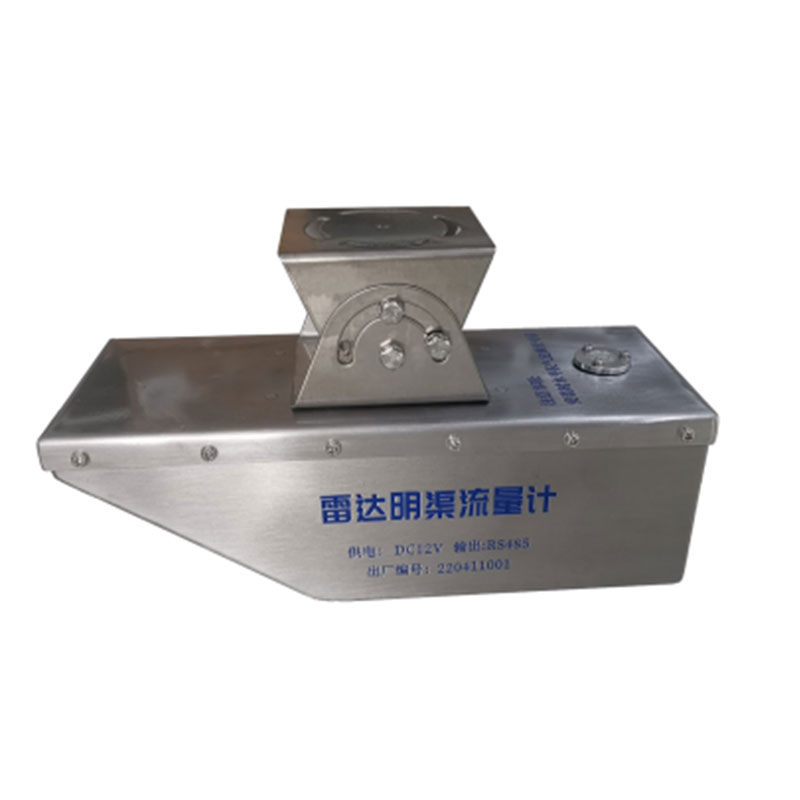
The integrated radar water level and velocity sensor employs a K-band planar microstrip array antenna to perform non-contact measurements of both water level and surface velocity. Immune to corrosion from wastewater and unaffected by sediment accumulation, the device is ideally suited for applications in river channels, drainage networks, sluice gates, and pumping stations, enabling automated, all-weather monitoring.
This integrated sensor is a non-contact hydrological monitoring instrument that seamlessly combines the functions of water level measurement and flow velocity measurement. By utilizing a K-band planar microstrip array antenna—characterized by excellent directionality, a narrow beam angle, and concentrated energy—the device effectively minimizes the impact of environmental interference on measurement accuracy. Regarding water level measurement, the device calculates the liquid level height by emitting high-frequency radar waves and measuring the time difference of the waves reflected back from the water surface; it offers a measurement range of 0 to 30 meters with a static accuracy of ±2 mm. For flow velocity measurement, based on the Doppler effect principle, the radar waves illuminate the moving water body, and the surface velocity is calculated by analyzing the frequency shift of the reflected waves; the velocity measurement range spans 0.03 to 20 meters per second, with an accuracy of ±0.01 m/s or ±1% of the full scale. The device integrates various functions—including vertical angle compensation, flow velocity averaging, signal strength detection, and serial communication control—enabling it to automatically correct for any measurement errors caused by installation tilt angles.
Specifically designed for environments such as drainage networks, discharge outlets, box culverts, sluice gates, pumping stations, and river channels, the integrated sensor is applicable to hydrological monitoring in rivers, lakes, tidal zones, reservoir sluices, underground drainage networks, and irrigation canals. Thanks to its non-contact measurement method, the device does not come into direct contact with the water body; consequently, it remains unaffected by wastewater corrosion, sediment, or surface debris. This design minimizes the scope of necessary civil engineering works, reduces susceptibility to water-induced damage, simplifies maintenance procedures, and effectively safeguards the safety of on-site personnel. The device performs reliably not only in routine environmental monitoring scenarios but also under challenging and hazardous observation conditions—such as during flood periods characterized by high flow velocities. In terms of data communication, the integrated radar water level and velocity sensor utilizes an RS485 digital interface compatible with the standard Modbus-RTU protocol, allowing for seamless integration into existing hydrological monitoring systems or automated urban water regime reporting networks. The device features low power consumption—drawing approximately 120 mA during measurement—and can typically be powered by solar energy to meet operational requirements, making it ideally suited for deployment at remote, unattended field stations. With an IP68 enclosure rating and an operating temperature range spanning from -35°C to +70°C, the unit is capable of withstanding a wide variety of extreme outdoor climatic conditions. For installation, the device can be mounted using existing structural foundations—such as bridges or mounting brackets—by simply ensuring that the radar beam is aligned parallel to the direction of water flow and positioned at a 45-degree angle relative to the water surface.
Article address:https://www.sqqx.net/en/news/866.html