
 +86 15898932201
Automated hydrological monitoring stations leverage the regional short message communication technologies of the BeiDou-2 and BeiDou-3 satellite systems. By integrating sensors for water levels, flow velocities, flow rates, rainfall, and other parameters, these stations achieve continuous, 24-hour online monitoring of rivers, lakes, and reservoirs, while enabling autonomous, real-time data transmission.
An automated hydrological monitoring station is a sophisticated piece of equipment that combines the regional short message communication capabilities of BeiDou-2 and BeiDou-3 with advanced hydrological and environmental monitoring technologies. The system seamlessly integrates sensing devices—such as water level sensors, flow velocity and rate meters, rain gauges, and water quality analyzers—with a BeiDou communication terminal. Characterized by autonomous operation, real-time transmission, intelligent monitoring, and precise forecasting capabilities, the system performs uninterrupted, 24-hour monitoring of flow velocity, water levels, flow rates, and rainfall across a wide range of scenarios, including rivers, lakes, tidal zones, reservoir sluice gates, groundwater networks, and irrigation channels. All collected data is processed by a main control board, encoded into satellite signals via a BeiDou-3 short message module, and transmitted to a command center at user-configurable intervals. Furthermore, the system supports bidirectional communication functions, allowing for the remote configuration of parameters and the retrieval of historical data.
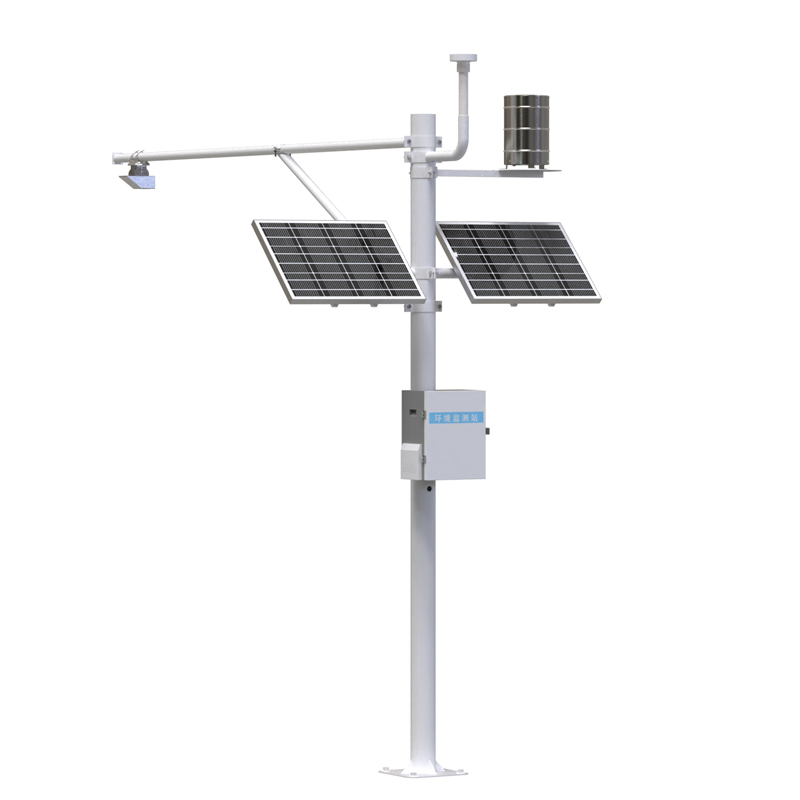
In terms of hardware architecture, an automated hydrological monitoring station typically comprises five key components: sensing devices, a telemetry terminal unit, a communication system, a power supply system, and a cloud management platform. The sensing devices encompass various sensors—including water level gauges, flow meters, rain gauges, water quality analyzers, and video surveillance cameras—while the telemetry terminal unit is responsible for data acquisition, storage, and protocol conversion. The communication system supports multi-mode connectivity—including 5G/4G cellular networks, BeiDou-3 short message services, and LoRa—and features a dual-channel backup mechanism; should the public cellular network connection be interrupted, the system automatically switches to BeiDou short message transmission to ensure zero data loss. The power supply system employs a dual-source solution utilizing both solar energy and lithium-ion batteries, enabling the station to operate continuously for over 30 days, even during prolonged periods of overcast or rainy weather. With an IP68 protection rating, the system is robust enough to withstand long-term submersion underwater as well as exposure to heavy rainfall and dusty environments.
In terms of practical application and deployment, automated hydrological monitoring stations have already been widely implemented in water conservancy projects across numerous provinces. The Ningxia-Inner Mongolia Hydrology Bureau has implemented a "one station, one strategy" renovation approach, optimizing the BeiDou satellite short-message transmission protocols for hydrological stations, and establishing seamless connectivity between BeiDou communication terminals and existing equipment at water-level and canal stations. This initiative has established a 24-hour, dual-link flood reporting model utilizing a combination of dedicated landlines and BeiDou satellite communication. The Guangzhou Hydrology Sub-bureau has piloted the deployment of integrated BeiDou rainfall stations—compact units that consolidate rain gauges, telemetry terminals, power supply systems, lightweight mounting stands, and BeiDou communication terminals—thereby ensuring stable operation in remote areas lacking access to commercial power grids. At the Miyun Reservoir in Beijing, BeiDou satellite communication equipment was retrofitted to 21 high-water-level monitoring points, with the entire installation process completed in just two days. BeiDou-based automated hydrological monitoring technology is rapidly emerging as the mainstream solution within the water conservancy sector for addressing the challenges of data transmission in remote regions.
Article address:https://www.sqqx.net/en/news/868.html