
 +86 15898932201
Weather Instruments uses a mechanical structure to measure meteorological elements, making it suitable for extreme environments and ensuring the collection of basic meteorological data.
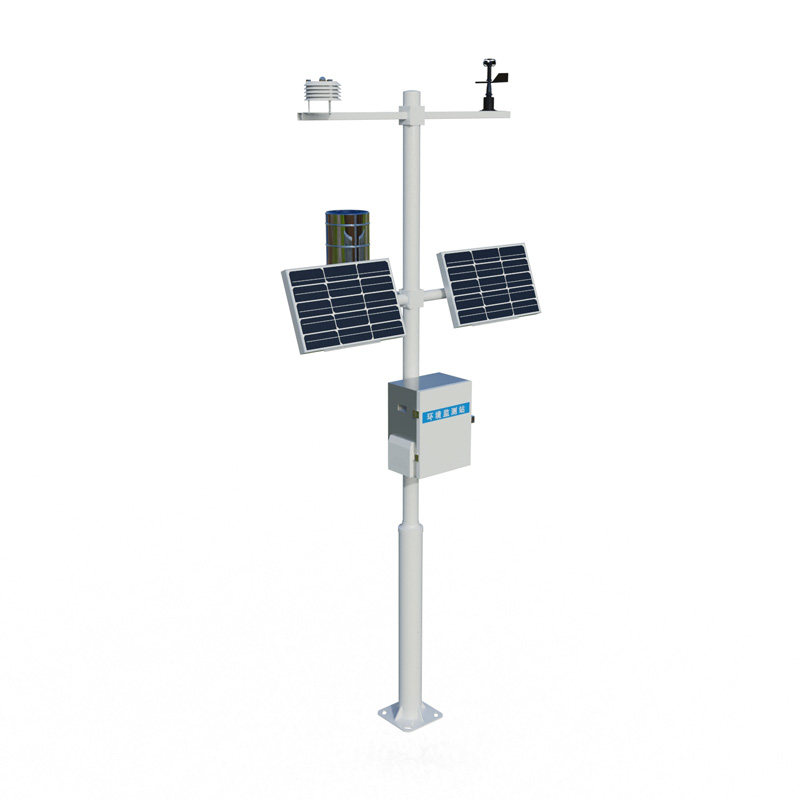
Weather Instruments is a professional meteorological observation device based on mechanical principles. This system measures basic meteorological elements such as wind speed, wind direction, and rainfall through a purely mechanical structure, without relying on an external power supply, and can operate stably under extreme environmental conditions.
Regarding measurement principles, Weather Instruments employs a long-proven mechanical structure design. Wind speed measurement uses a cup-type structure, where the rotation of the cup drives a gear system, directly driving a pointer to display the wind speed value on a dial. Wind direction measurement uses a wind vane, combined with a mechanical transmission device, to indicate the wind direction angle on a direction dial. Rainfall measurement uses a tipping bucket rain gauge, counting the number of times the bucket tipps to determine rainfall.
This system has significant advantages in environmental adaptability. Due to its all-mechanical structure, the equipment is unaffected by lightning or electromagnetic interference and can operate normally within a temperature range of -40℃ to +60℃. The mechanical structure is simple and reliable, with key components made of corrosion-resistant materials, providing dust and salt spray protection, making it suitable for long-term observation in harsh environments such as high mountains, islands, and deserts.
In terms of maintenance, the Weather Instruments only requires periodic lubrication and structural inspection of mechanical components, eliminating the need for complex on-site calibration. This low-maintenance characteristic makes it particularly suitable for deployment in remote areas with weak infrastructure, effectively reducing the operating costs of meteorological observation networks.
Currently, the Weather Instruments is mainly used in three scenarios: first, as a benchmark observation device, providing data comparison references for automatic weather stations; second, deployed in remote areas with limited power supply to build basic meteorological observation networks; and third, as a backup observation device to ensure data continuity during emergency monitoring of major natural disasters.
With the development of observation technology, the modern Weather Instruments has undergone technological improvements while maintaining its traditional advantages. The new model uses lightweight materials to reduce equipment weight, optimizes the mechanical structure to improve measurement accuracy, and offers an optional data recording module for automatic storage of observation data.
As an important component of the meteorological observation system, the Weather Instruments continues to play a vital role in meteorological monitoring, disaster prevention and mitigation, and climate change research due to its reliability, adaptability, and economy. This observation method, based on mechanical principles, provides a solid data foundation for modern meteorological science.
Article address:https://www.sqqx.net/en/news/790.html