
 +86 15898932201
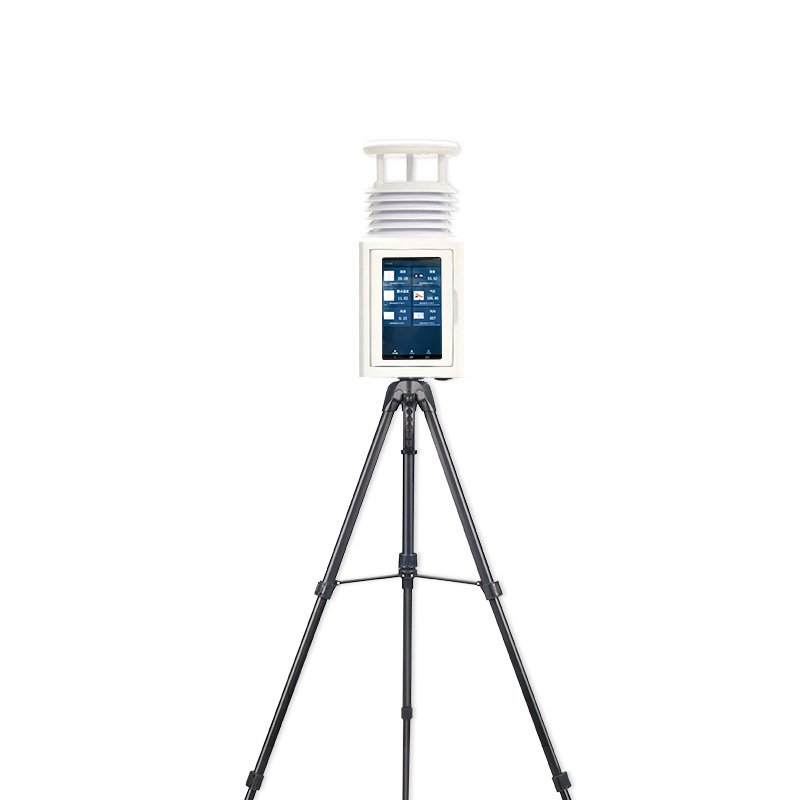
Automated Weather Stations is a meteorological observation facility integrating multiple sensors and data acquisition systems, capable of continuously monitoring and transmitting meteorological data in harsh environments.
Automated Weather Stations integrates various meteorological sensors, including those for temperature, humidity, wind speed, wind direction, and precipitation, combined with a data acquisition and processing system, to achieve real-time continuous monitoring of meteorological elements. The system adopts an integrated structural design with robust physical characteristics, enabling it to operate normally under severe weather conditions such as strong winds.
In terms of technical performance, Automated Weather Stations features stable performance and strong anti-interference capabilities. It employs a stable RS485 signal output method, ensuring reliable data transmission even in complex environments with strong electromagnetic interference. This technological advantage extends its applicability to remote areas and harsh environments, including mountains, deserts, and coastal areas that are difficult to cover with traditional meteorological observation methods.
The core advantage of Automated Weather Stations lies in its high level of intelligence and automation. The system can not only automatically collect various types of meteorological data but also perform preliminary processing and storage, and achieve remote data transmission through a communication network. This automation significantly reduces the need for manual intervention, making meteorological observation work more efficient and accurate.
In practical applications, Automated Weather Stations is widely used in various fields such as weather forecasting, agricultural production, transportation, water conservancy projects, and scientific research. In weather forecasting, it provides continuous observational data to support the accuracy of weather forecasting models; in agricultural production, it provides microclimate data support for precision agriculture; and in transportation, it provides real-time meteorological information services for aviation, maritime, and road transport.
The system's installation and deployment take into account the specific requirements of different environments. In remote areas, a solar power system is typically used to ensure continuous operation even without mains power. In harsh environments, the equipment casing is designed for corrosion resistance and lightning protection, ensuring long-term stable operation under severe conditions.
With the development of IoT and communication technologies, modern Automated Weather Stations is evolving towards higher integration and lower power consumption. The new generation of equipment adds intelligent data diagnostic functions, automatically identifying sensor and data anomalies, improving the quality and reliability of observational data. At the same time, the equipment maintenance cycle is extended, reducing long-term operating costs.
As an important component of the modern meteorological observation system, Automated Weather Stations provides reliable meteorological data support to various industries through its automated and intelligent technical features. Its wide range of applications and stable performance make it an indispensable infrastructure in meteorological monitoring networks.
Article address:https://www.sqqx.net/en/news/791.html