
 +86 15898932201
Meteorological observation equipment are specialized instruments used for meteorological forecasting and monitoring, and can be divided into two main categories: ground-based and upper-air meteorological observation.
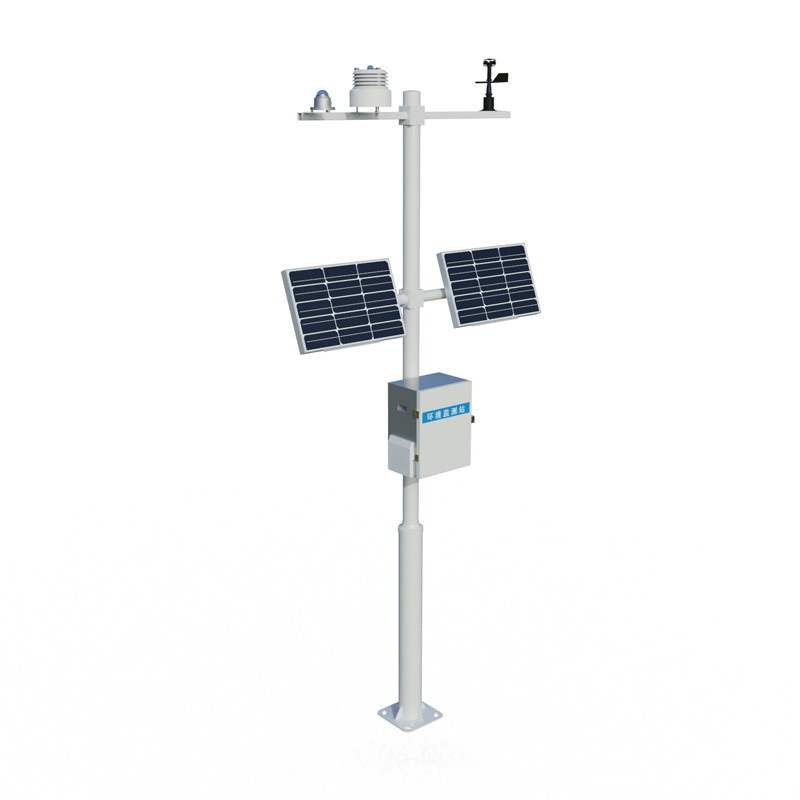
Meteorological observation equipment are professional tools serving the field of meteorological forecasting and monitoring, primarily including ground-based meteorological observation instruments and upper-air meteorological sounding instruments. These devices feature fully automatic data acquisition, storage, processing, and transmission functions, and are considered intelligent monitoring equipment. Their main task is to collect various meteorological parameters. Commonly used devices include sensors for temperature, humidity, wind direction, wind speed, and atmospheric pressure, used to measure and record various parameter data in the atmospheric environment.
Ground-based meteorological observation instruments are a fundamental component of the meteorological monitoring network. These devices are installed in fixed observation fields or on mobile platforms, continuously monitoring meteorological elements in the near-surface layer. Temperature sensors typically use platinum resistance or thermocouple principles, capable of accurately measuring ambient temperatures from -50℃ to +50℃. Humidity sensors mostly use capacitive sensing elements, accurately reflecting changes in atmospheric humidity. Wind direction and speed sensors record the dynamic characteristics of the wind field using ultrasonic or mechanical principles. Atmospheric pressure sensors, based on piezoresistive or capacitive effects, monitor subtle fluctuations in atmospheric pressure. These sensors together constitute a complete ground-based meteorological observation system.
Upper-air meteorological sounding instruments are primarily used to detect the conditions of the atmosphere above the ground. Radiosondes are typical representative devices, carried aloft by balloons, measuring atmospheric pressure, temperature, humidity, and other elements at different altitude levels during ascent. Radar systems can detect the distribution and intensity of precipitation cloud systems, providing three-dimensional atmospheric structure information. Wind profiler radars are specifically used to monitor changes in the upper-air wind field, obtaining vertical distribution data of wind direction and speed. These upper-air sounding devices complement the limitations of ground-based observations, providing crucial upper-air data support for weather forecasting.
Modern Meteorological observation equipment have significant intelligent features. The data acquisition system can automatically receive analog signals from various sensors and convert them into digital information. The storage module is responsible for saving historical data, usually with power-off protection. The processing unit performs quality control, format conversion, and preliminary analysis of the raw data. The communication module supports wired or wireless transmission methods, sending the processed data to the meteorological data center. This automated working mode greatly improves the efficiency and reliability of meteorological observation.
In terms of observed parameters, Meteorological observation equipment covers the main characteristics of the atmospheric environment. In addition to basic elements such as temperature, humidity, pressure, and wind, it also includes parameters such as precipitation, evaporation, radiation, and sunshine duration. Precipitation is measured using rain gauges or radar retrieval techniques, recording the amount and intensity of rainfall. Evaporation is measured using evaporation pans coupled with water level sensors. Radiation monitoring covers multiple spectral bands, including total radiation, net radiation, and ultraviolet radiation. Sunshine duration is recorded by a sunshine recorder, measuring the actual sunlight time. These parameters collectively depict a complete picture of atmospheric conditions.
The applications of meteorological observation are extensive. In weather forecasting, observational data provides initial fields for numerical weather prediction models, supporting short-term, medium-term, and long-term weather forecasts. In climate monitoring, long-term continuous observation records form the basic data for climate research. Aviation and maritime industries rely on meteorological observations to provide route weather information and ensure transportation safety. Agricultural production requires accurate meteorological data to guide farming and disaster prevention. In urban management, meteorological observations support decision-making in areas such as traffic management and energy supply.
With technological advancements, meteorological observation is continuously developing towards intelligence and precision. New sensors adopt digital output interfaces, reducing signal transmission errors. Equipment power consumption continues to decrease, making it more suitable for long-term field monitoring. Communication methods are diversified, supporting various transmission channels such as satellite and mobile networks. Data quality control algorithms are increasingly sophisticated, capable of automatically identifying and eliminating abnormal data. These technological advancements are driving the overall improvement of meteorological observation capabilities.
In actual deployment, meteorological observation needs to adhere to strict specifications. Observation sites should be far from obstacles to ensure data representativeness. Equipment installation height and orientation must conform to unified standards to ensure comparability of observation results. Regular maintenance and calibration are crucial for ensuring data accuracy, including sensor cleaning, parameter verification, and component replacement. Professional technicians are responsible for the daily operation monitoring and troubleshooting of the equipment, ensuring the stable operation of the observation system.
The development of meteorological observation is closely related to the progress of meteorological science. The emergence of new observation technologies often drives breakthroughs in meteorological theory, while new demands in meteorological research promote innovation in observation equipment. This virtuous cycle ensures the continuous improvement of meteorological observation capabilities, expanding the observation range from the ground to space, and extending observation elements from conventional parameters to specialized items, providing a solid technical foundation for humanity's understanding and prediction of weather and climate.
Article address:https://www.sqqx.net/en/news/792.html