
 +86 15898932201
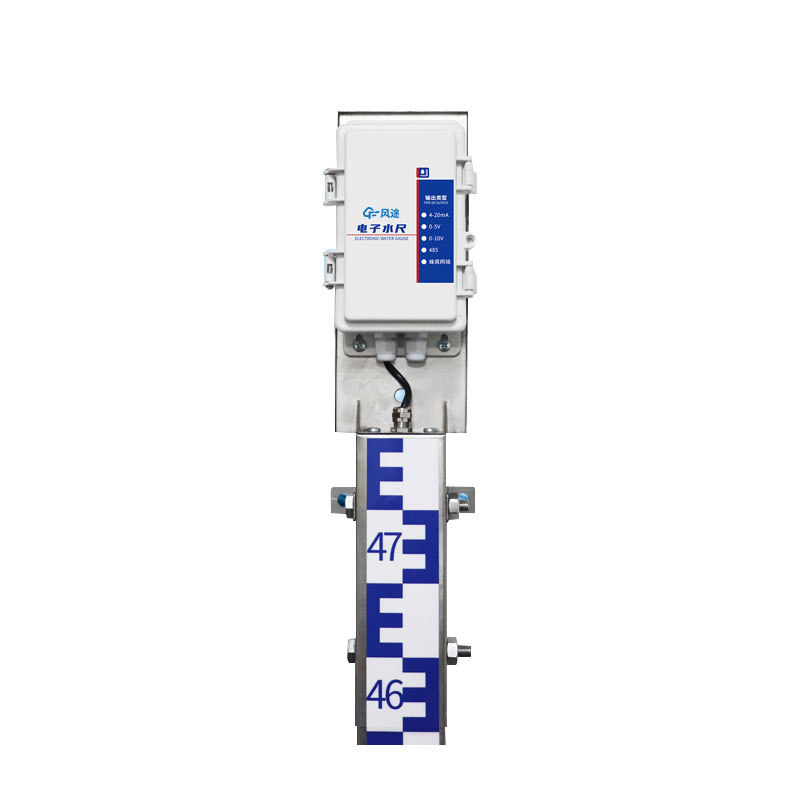
Bridge level gauge is a new type of water level monitoring device that uses high-precision sensor technology to digitally process and transmit water level data, achieving a measurement accuracy of up to 1 centimeter.
Bridge level gauge is an intelligent monitoring device specifically designed for water level measurement. It utilizes high-precision sensor technology to digitally process and transmit water level data. The device features high accuracy, corrosion resistance, and long lifespan, with a measurement accuracy of up to 1 centimeter. Compared to traditional manual water gauges or float-type water level meters, Bridge level gauge achieves automatic collection and transmission of water level data through digital means. In scenarios such as urban waterlogging points and flood-prone areas, the device is battery-powered, requiring no external power supply, making it easy to install and use.
The working principle of Bridge level gauge is based on advanced sensing technology. The core components of the device include a water level sensor, a signal processing unit, and a data transmission module. The water level sensor typically uses a piezoresistive or ultrasonic ranging principle to convert water level changes into electrical signals. The signal processing unit amplifies, filters, and digitally processes the raw signal, eliminating interference factors such as wave fluctuations to obtain accurate water level values. The data transmission module sends the processed water level data to the monitoring center via wireless communication. The entire measurement process is fully automated, requiring no manual intervention, and allows for continuous monitoring.
In the field of water conservancy and hydropower engineering, Bridge level gauge has a wide range of applications. Researchers and water conservancy personnel use Bridge level gauge to monitor changes in river flow, providing data support for water resource management. The device can be installed in key locations such as reservoir dams, river cross-sections, and sluice gates to monitor upstream and downstream water levels in real time. The monitoring data is used for flood warning, scheduling decisions, and engineering safety assessment. Compared to traditional manual observation, the continuous water level sequence provided by Bridge level gauge better reflects the dynamic changes in water level, providing a more complete data basis for hydrological analysis.
Urban waterlogging monitoring is another important application area for Bridge level gauge. The device can be deployed in low-lying urban areas, underpasses, and drainage networks to monitor water depth in real time. When the water level exceeds the warning threshold, the system automatically sends an alarm to the management department, providing decision-making basis for emergency drainage and traffic control. The battery-powered design allows the device to operate normally even in the event of a power outage, ensuring continuous monitoring under extreme weather conditions. Its easy installation allows for rapid deployment in locations requiring monitoring, forming an urban waterlogging monitoring network.
Compared with traditional water level monitoring equipment, Bridge level gauge has significant advantages. Manual water level gauges require on-site readings by personnel, resulting in low data acquisition frequency and the inability to achieve real-time transmission. Float-type water level gauges suffer from mechanical wear and require regular maintenance. The Bridge level gauge utilizes a fully solid-state design with no moving parts, reducing the risk of failure. Digital transmission eliminates manual reading errors and improves data reliability. Corrosion-resistant materials enable the device to operate stably in aquatic environments for extended periods, reducing maintenance costs. These features make the Bridge level gauge more suitable for the needs of modern hydrological monitoring.
With the development of IoT technology, the functionality of the Bridge level gauge is constantly improving. The new generation of products integrates more intelligent features, such as automatic temperature compensation, data quality checks, and remote diagnostics. The low-power design further extends battery life, with some models capable of continuous operation for several years without battery replacement. Compatibility with other monitoring equipment is also increasing, allowing integration into more complex water monitoring systems. In the future, the Bridge level gauge will play a more important role in smart water management and smart city construction, providing more comprehensive technical support for flood control, disaster reduction, and water resource management.
Article address:https://www.sqqx.net/en/news/794.html