
 +86 15898932201
Slope monitoring system is a structural health monitoring system centered around GNSS displacement monitoring stations. Through high-precision sensors, it provides online monitoring and analysis of slope displacement, achieving millimeter-level data acquisition and intelligent early warning. This system effectively monitors slope stability, promptly reflects factors leading to slope instability, and provides technical support for the early warning of geological disasters such as landslides and collapses, reducing casualties and property losses.
Slope monitoring system is an important component of modern geotechnical engineering safety monitoring, primarily focusing on the real-time monitoring of the stability of natural and artificial slopes. These systems continuously collect deformation data such as displacement, settlement, and inclination through high-precision monitoring equipment installed at key locations on the slope. This data is then combined with environmental factors for comprehensive analysis, enabling the assessment and early warning of slope stability.
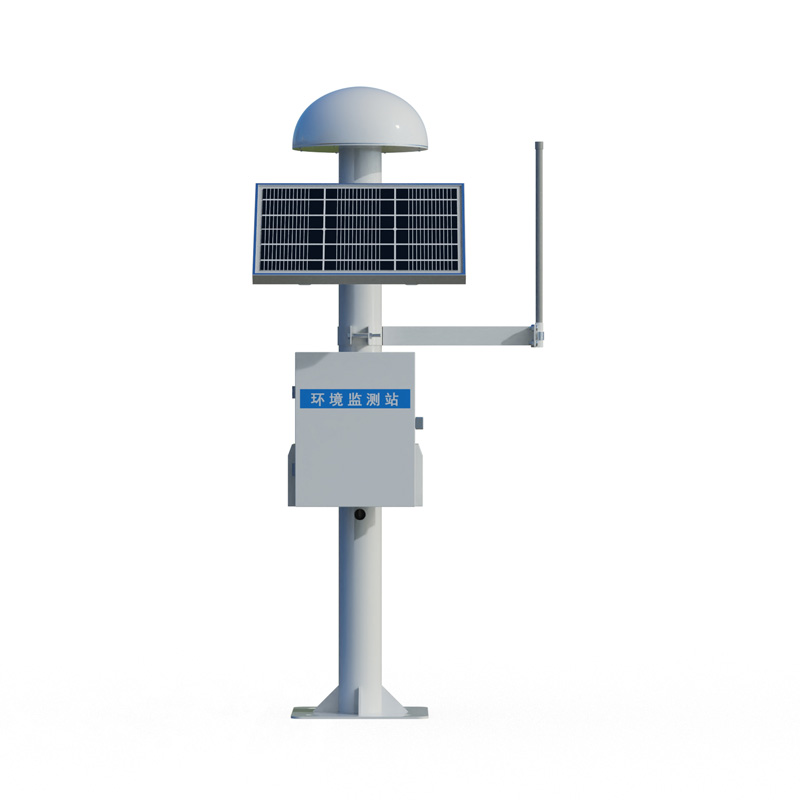
The core of the system, the GNSS displacement monitoring station, utilizes Global Navigation Satellite System positioning technology. By receiving multi-satellite signals and using differential algorithms, it can achieve positioning accuracy of ±2.5mm horizontally and ±5mm vertically. The monitoring station typically consists of a GNSS receiver, lightning protection device, power supply system, and communication module, capable of long-term stable operation in outdoor environments. When installing the equipment, it is necessary to select a location with an unobstructed view and stable foundation to ensure the quality of satellite signal reception, while avoiding reflective surfaces that may cause multipath effects.
In addition to the GNSS monitoring station, a complete Slope monitoring system system also includes various auxiliary sensors. Crack gauges measure the opening and closing changes of surface cracks on the slope, inclinometers monitor deep soil displacement, rain gauges record precipitation data, and groundwater level monitoring wells track changes in pore water pressure. These multi-source data collectively form the basis for slope stability assessment. By analyzing the correlation between various parameters, the system can more accurately determine the safety status of the slope.
Monitoring data is typically transmitted using 4G/5G wireless communication. In areas with poor signal coverage, Beidou short message communication can be used. After the data is aggregated to the cloud platform, the system performs real-time processing and analysis, including data filtering, coordinate transformation, and trend prediction. The platform's built-in early warning module automatically issues alarm information based on preset thresholds, supporting multiple push methods such as SMS and email, ensuring that management personnel are promptly informed of any abnormal slope conditions. In practical applications, the deployment plan of Slope monitoring system needs to be determined in conjunction with the engineering geological conditions. For rock slopes, monitoring points should be primarily placed in areas where structural discontinuities are well-developed; for soil slopes, attention should be paid to the location of potential slip surfaces. The system can identify early signs of slope deformation, such as continuously increasing displacement rates or sudden changes in deformation direction, which are often precursors to instability. Through retrospective analysis of historical data, a quantitative relationship between slope deformation and triggering factors (such as rainfall and earthquakes) can also be established, providing a scientific basis for disaster prevention and mitigation.
Slope monitoring system has been widely applied in various scenarios, including highway and railway slopes, reservoir banks, and open-pit mine slopes. The long-term operational data of the system not only serves for daily safety monitoring but also provides a reference for the design and construction of similar projects. With the development of Internet of Things technology, modern Slope monitoring system is evolving towards multi-parameter integration and intelligent early warning, continuously improving the accuracy and timeliness of early warning through the introduction of machine learning and deep learning algorithms, providing more reliable technical support for geological disaster prevention and control.
Article address:https://www.sqqx.net/en/news/800.html