
 +86 15898932201
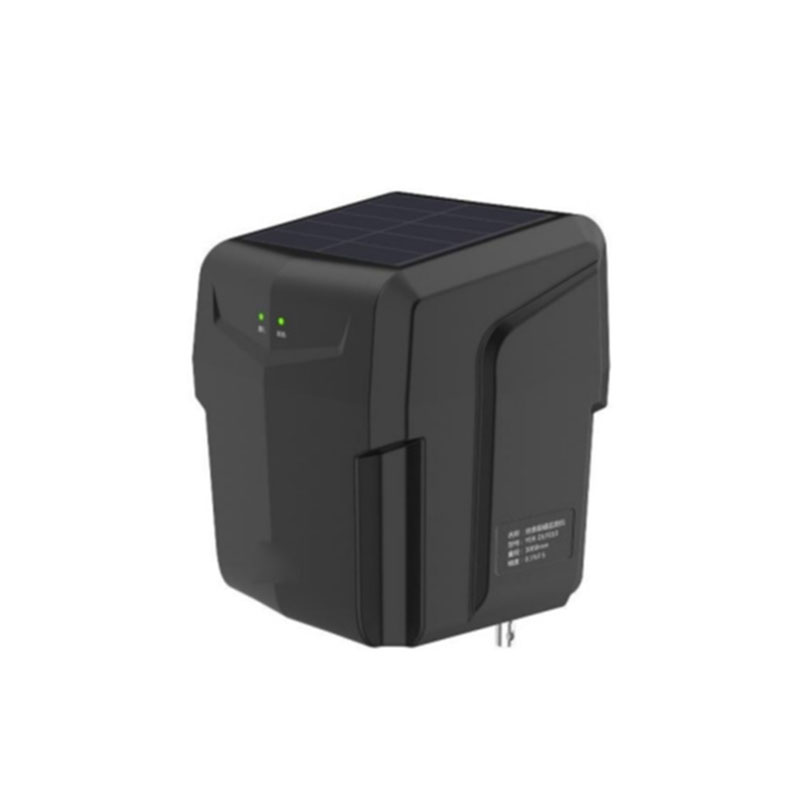
Structural Health Monitor is a precision instrument specifically designed to detect changes in object tilt angle and acceleration. The device achieves precise measurement of the tilt state of the object under test by sensing the change in the component of gravitational acceleration along the sensor axis. Its core function is to continuously monitor minute tilt changes in geological formations or engineering structures, providing data for stability assessment.
In terms of technical principles, Structural Health Monitor is manufactured based on MEMS technology, including micro-mechanical structures and signal processing circuits. When the sensor tilts, the internal mass block is displaced under the action of gravity, causing a change in capacitance value. This change is processed into a corresponding tilt angle value after signal conversion and amplification. At the same time, the sensor can also detect dynamic acceleration, distinguishing the effects of static tilt and dynamic vibration.
The main measurement parameters of the sensor include single-axis or dual-axis tilt angle, with a measurement range typically reaching ±30 degrees and an angular resolution of up to 0.001 degrees. The acceleration measurement range is designed according to application requirements, ranging from ±2g to ±200g, capable of adapting to various monitoring scenarios from slow tilting to violent vibration. The output frequency can be set as needed, from several Hertz to several thousand Hertz, meeting different sampling requirements.
The device structure includes sensing elements, signal conditioning circuits, data processor, and communication interface. The sensing element converts physical quantities into electrical signals, the signal conditioning circuit performs amplification and filtering, the data processor completes numerical calculations and temperature compensation, and the communication interface supports multiple data output methods such as RS485, 4-20mA, or wireless transmission. This modular design ensures the reliability and adaptability of the device.
Structural Health Monitor is particularly important in the field of geological monitoring. When installed on slopes, landslides, or mining areas, it can continuously monitor the tilt change trend of geological formations. By analyzing the change in tilt angle over time, the stability of the geological formation can be assessed, providing a scientific basis for geological disaster early warning. Long-term monitoring data helps to establish a correlation model between geological deformation and inducing factors. In the field of structural engineering monitoring, this sensor is widely used in the health monitoring of bridges, high-rise buildings, tower structures, and retaining walls. By measuring the tilt response of structures under load, temperature changes, or foundation settlement, the safety status of the structure can be assessed. The miniaturization of the sensor allows it to be embedded within the structure, enabling concealed installation and long-term monitoring.
Equipment installation requires considering the alignment of the measurement axis with the monitoring direction, and the fixing method must ensure a rigid connection between the sensor and the monitored object. In outdoor environments, waterproof, lightning protection, and temperature compensation measures are also necessary to ensure the accuracy and continuity of monitoring data. The power supply system typically uses a DC power supply or solar power solution, combined with a low-power design for long-term continuous operation.
The data acquisition system records tilt and acceleration data at a preset sampling frequency and transmits it to the monitoring center via wired or wireless means. Data analysis includes trend analysis, spectral analysis, and anomaly detection. When the monitoring data exceeds a preset threshold, the system automatically issues a warning signal, prompting relevant personnel to take countermeasures.
The technical advantages of Structural Health Monitor are reflected in its high precision, long-term stability, and environmental adaptability. The new generation of products also integrates self-diagnostic functions and remote configuration capabilities, greatly improving the usability and maintenance convenience of the equipment. With the development of Internet of Things technology, these sensors are playing an increasingly important role in smart cities, geological disaster prevention, and engineering safety monitoring.
Article address:https://www.sqqx.net/en/news/797.html