
 +86 15898932201
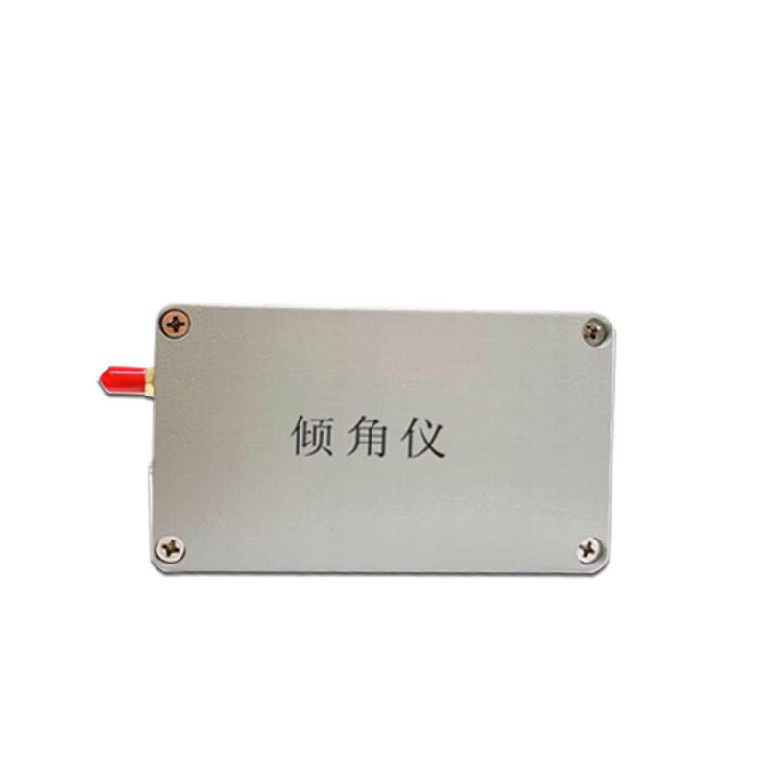
Wireless Tilt Sensor directly determines the change in the object's tilt angle relative to the direction of gravity by measuring the gravitational acceleration component acting on it. This technology is used for real-time monitoring of high-frequency vibrations in structures and micro-tilt changes in geological hazard bodies. It can be combined with intelligent gateways, alarm devices, and IoT platforms to build a closed-loop system for self-monitoring, self-analysis, and self-alarming of geological hazard points. It is applicable to multiple professional monitoring fields, including geological hazards, geotechnical engineering, construction engineering, transportation, water conservancy, and municipal engineering.
The core working principle of Wireless Tilt Sensor is based on its perception of gravitational acceleration. When the sensor body has an angle with the horizontal plane, gravitational acceleration will produce a specific component output on its sensitive axis. By solving this output signal, the current tilt angle can be accurately obtained. This physical principle makes its measurement results direct and reliable, making it an effective tool for monitoring static and low-frequency dynamic tilt angles.
In practical monitoring applications, this technology mainly addresses two types of scenarios: high-frequency structural vibrations and micro-tilt changes in geological bodies. For bridges, high-rise buildings, tower structures, etc., accelerometers can capture the high-frequency vibration response of the structure under wind loads, traffic loads, or seismic effects, analyzing its dynamic characteristics and health status. For geological hazard bodies such as landslides, collapses, and settlements, the sensor can continuously perceive their minute tilt changes. These changes are often precursors to instability, enabling early warning.
To achieve automated monitoring, Wireless Tilt Sensor is usually integrated into an IoT system as a sensing node. The sensor node is responsible for collecting raw tilt angle data and transmitting it to the intelligent gateway via wired or wireless means. The intelligent gateway has edge computing capabilities and can perform preliminary data processing, filtering, and local storage, and make real-time judgments based on preset thresholds. Once the monitoring data exceeds the safety range, the gateway can immediately trigger on-site sound and light alarm devices and upload the warning information to the cloud-based IoT platform.
The cloud-based IoT platform undertakes the core functions of data aggregation, in-depth analysis, and system management. The platform receives data from various monitoring points, performs long-term storage and visual display. By integrating professional analysis algorithms, the platform can identify tilt change trends, assess the structural stability, and generate various monitoring reports. Warning information can be sent to relevant management personnel via SMS, email, or platform messages through the platform, forming a complete closed loop from data acquisition to warning issuance.
This closed-loop monitoring system has broad application value in multiple fields. In the field of geological disaster prevention, it can be used for the automated monitoring and early warning of landslides and unstable rock masses. In geotechnical engineering, it is suitable for deformation monitoring of foundation pits, slopes, and tunnels. In construction engineering, it serves the health monitoring of large structures such as high-rise buildings, stadiums, and airports. In the transportation sector, it can be used for long-term safety monitoring of bridges, elevated roads, and railway subgrades. In the water conservancy and municipal engineering fields, it provides real-time control over the inclination status of infrastructure such as dams, dikes, pipe networks, and utility tunnels.
During system implementation, key technical aspects such as sensor selection, installation protection, power supply, and communication reliability need to be carefully considered. Accelerometers with appropriate range, resolution, and frequency response characteristics should be selected and securely installed at the monitoring points, ensuring that their axes are aligned with the direction to be measured. In harsh outdoor environments, protective casings should be provided for the sensors to ensure their long-term stable operation. The stability of the power supply system and communication network is fundamental to the continuous operation of the system, and a solution combining solar power supply and wireless cellular networks is often adopted.
The monitoring system built using Wireless Tilt Sensor transforms traditional manual periodic inspections into automated, information-based, and intelligent real-time monitoring, greatly improving the timeliness and reliability of engineering safety monitoring and providing effective technical means for preventing disasters and protecting people's lives and property.
Article address:https://www.sqqx.net/en/news/806.html