
 +86 15898932201
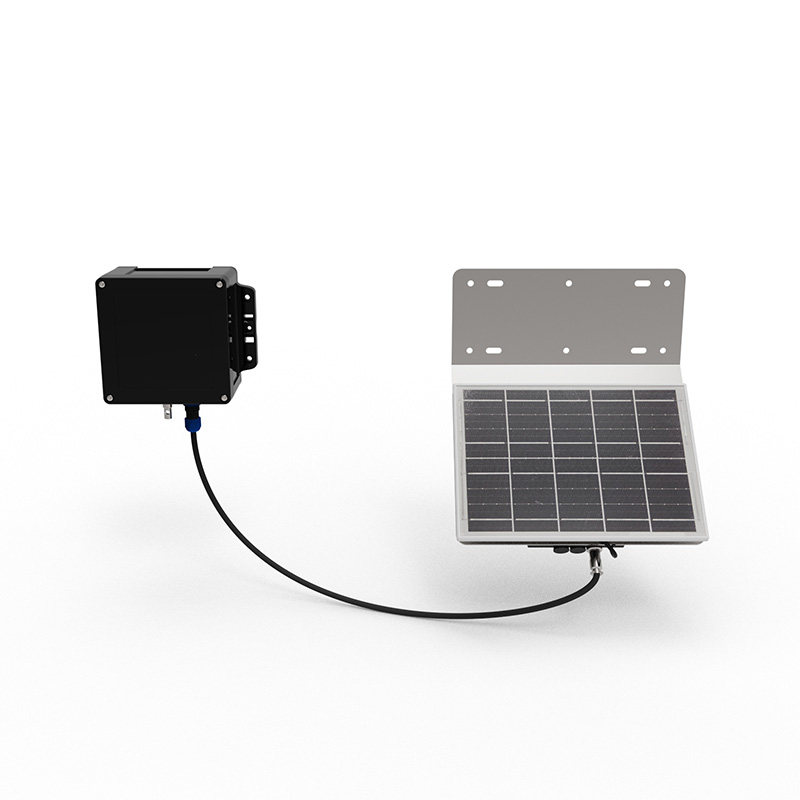
Crack monitoring system is specifically designed for the precise monitoring of relative displacement changes in surface, slope, and structural cracks, with a particular focus on surface cracks in landslide bodies. This equipment features trigger-based dynamic monitoring capabilities, providing critical data for geological disaster prevention and engineering safety.
Crack monitoring system is a specialized device for precise, automated monitoring of relative displacement in surface cracks. Its core function is to continuously measure and record the relative position changes on both sides of the target area's cracks, thereby capturing data on the entire process of crack formation, development, and accelerated deformation, providing direct evidence for judging its stability and evolutionary trend.
The objects monitored by this equipment mainly include various naturally or artificially formed cracks. These include surface cracks appearing on natural slopes or landslide bodies, which are key indicators of landslide instability; unloading cracks in rock and soil masses caused by unloading effects, commonly found in high slopes, tunnel entrances, and mining areas; and structural cracks appearing on the surface of artificial structures such as buildings, bridges, and dams, which may affect structural safety and durability. The monitoring station measures the millimeter-level or even sub-millimeter-level changes in parameters such as crack width and length to achieve quantitative assessment of their activity.
In terms of technical implementation and working mode, modern Crack monitoring system typically uses high-precision sensors, such as wire displacement sensors, laser rangefinders, or distributed fiber optic sensing systems, installed directly across the cracks to measure their opening or closing deformation. The equipment integrates data acquisition, processing, and communication modules. One of its important working characteristics is its trigger-based dynamic monitoring capability. That is, when the crack is in a stable and slowly changing stage, it performs regular data acquisition at a lower frequency to record trends; once the deformation rate exceeds a preset threshold, or is triggered by events such as vibration, the system can immediately automatically switch to a high-frequency acquisition mode to capture the dynamic response process of the crack in a critical state or under external disturbances, which is crucial for disaster early warning. The collected data can be transmitted to the monitoring center platform via wired or wireless means for real-time display, analysis, and storage.
Based on its precise and reliable monitoring capabilities, Crack monitoring system plays an irreplaceable role in several important fields. In the field of geological disaster prevention and control, it is a core component of professional monitoring and early warning networks for geological disasters such as landslides and collapses. By continuously monitoring the deformation of cracks at the rear and sides of landslide bodies, it provides scientific decision-making support for early identification, warning, and emergency response to disasters, directly serving the safety of people's lives and property and national land spatial planning. In the field of engineering construction, the monitoring station is widely used in the safety monitoring of major projects such as reservoir banks, railway and highway slopes, and open-pit mines, ensuring stability during the construction and operation phases. At the same time, long-term monitoring of structural cracks in important buildings and historical sites can assess their health status and guide maintenance and reinforcement. In the field of scientific research, it provides valuable field measurement data for disciplines such as geology, geotechnical engineering, and engineering geology, enabling research into crack propagation mechanisms, rock and soil mass failure processes, and the validation of theoretical models. Therefore, Crack monitoring system has become a key modern technological equipment in disaster prevention and mitigation, engineering safety, and scientific research.
Article address:https://www.sqqx.net/en/news/837.html