
 +86 15898932201
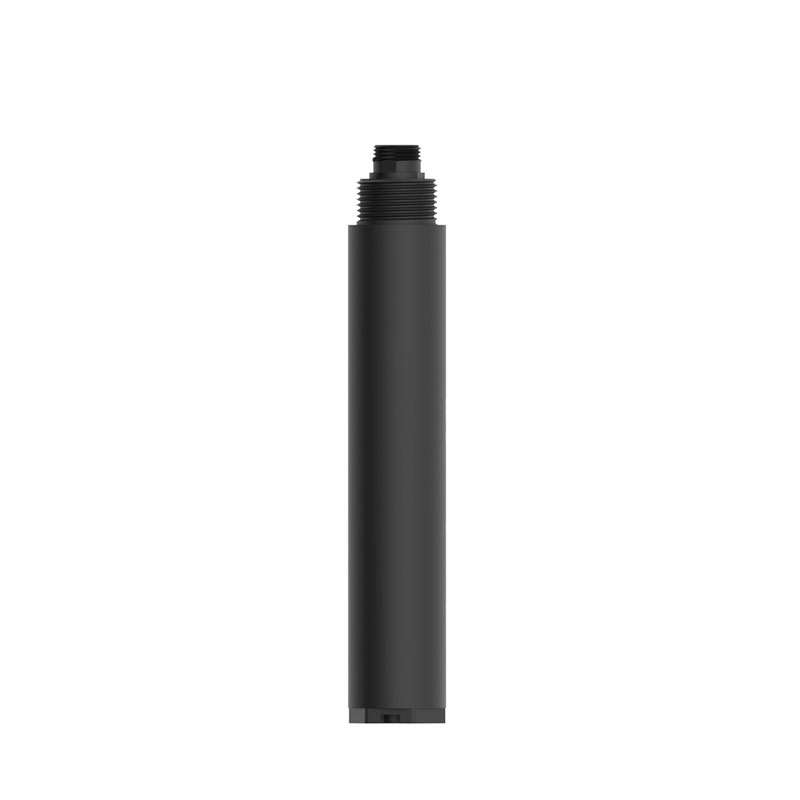
Online turbidity sensor device measures the degree of turbidity caused by insoluble suspended solids and colloidal substances in liquids based on the principle of light scattering. The equipment is suitable for drinking water, wastewater, and industrial process water. By continuously monitoring the turbidity value of water, it provides quantitative data for water treatment process control, effluent compliance, and water safety. It uses 90-degree scattered light or transmission turbidimetry, has a fast response, and supports online installation and laboratory use.
Turbidity is one of the core indicators characterizing the clarity of water. Although the content of particulate matter such as clay, silt, microorganisms, and organic debris in water is trace, it directly affects disinfection efficiency, pipeline transportation safety, and the quality of industrial products. Traditional turbidity measurement uses visual turbidimetry or laboratory turbidimeters, with long sampling intervals, and cannot reflect instantaneous fluctuations in water quality. Online turbidity sensor uses optical sensing technology to achieve in-situ continuous measurement, providing minute-level data for water plant filter operation, wastewater discharge monitoring, and industrial circulating water control.
The equipment measurement follows the principle of light scattering. A stable light beam emitted by the light source passes through the water sample being tested. Suspended particles in the water sample scatter the light, and a photodetector receives the intensity of the scattered light at a 90-degree angle. The intensity of the scattered light is linearly related to the particle concentration within a certain range. After circuit conversion, the turbidity value is output, expressed in NTU. Some models simultaneously measure transmitted light, compensating for chromatic interference and light source attenuation by using the ratio of scattered to transmitted light. The sensor incorporates a bubble elimination structure and an anti-contamination window to reduce the impact of external factors on measurement stability.
In the drinking water treatment field, Online turbidity sensor is installed at the outlet of coagulation sedimentation tanks and in the filtered water pipeline. Fluctuations in raw water turbidity guide the dosage of coagulant. The turbidity of the filtered water must be maintained below 0.1 NTU to ensure pathogen removal rate. Continuous turbidity curves can provide early warning of abnormal conditions such as filter breakthrough and activated carbon leakage, preventing substandard water from entering the pipeline network. For secondary water supply facilities, online turbidity monitoring is used to determine tank contamination or biofilm shedding.
In wastewater and environmental monitoring scenarios, Online turbidity sensor is used at the outlet of wastewater treatment plants and in automatic river water quality monitoring stations. Turbidity emissions are included in the total emission control indicators of the pollutant discharge permit. Real-time data is uploaded to the environmental protection platform, and alarms and sample retention are triggered when standards are exceeded. Surface water turbidity reflects the intensity of soil erosion, algal blooms, and urban non-point source pollution; coupled with rainfall processes, it can be used to calculate pollution load flux.
Industrial process water includes circulating cooling water, reverse osmosis feed water, cleaning water, and food and beverage process water. Online turbidity sensor monitors suspended solids removal efficiency at the outlet of the circulating water system's side filter, provides early warning of security filter penetration before the reverse osmosis membrane, and ensures product clarity in beer and beverage bottling lines. Turbidity monitoring of purified water in the pharmaceutical industry follows pharmacopoeia standards, and sensor materials meet sanitary requirements.
Online turbidity sensor is available in two types: laboratory benchtop and online. Laboratory instruments use colorimetric bottles or flow cells, suitable for third-party testing and calibration comparison. Online equipment is equipped with automatic cleaning brushes or compressed air cleaning systems, extending the maintenance cycle to more than four weeks. Calibration uses formalin standard solution to establish multi-point curves; the long-term stability of the sensor depends on regular calibration and optical path cleaning. With the improvement of water quality standards and the increase in automation, Online turbidity sensor extends from the end-of-pipe testing stage to the front-end of process control, and operates in conjunction with the water treatment dosing system and membrane cleaning procedure to form a closed-loop water quality management system.
Article address:https://www.sqqx.net/en/news/841.html