
 +86 15898932201
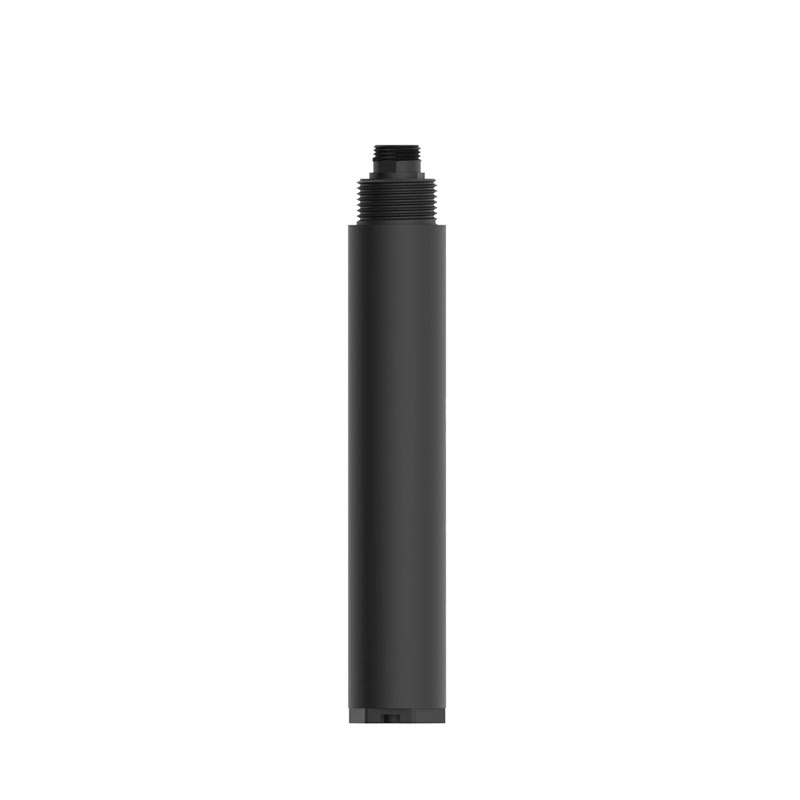
Suspended Solids Sensor employs infrared scattered light technology, featuring a measurement range of 0–2000 mg/L, a measurement accuracy of ±5%, and a resolution of 0.1 mg/L. It is ideally suited for the detection of suspended solids in wastewater across various industries, including wastewater treatment, chemicals, pharmaceuticals, and textile dyeing and printing.
Suspended Solids Sensor is a high-precision water quality analysis instrument capable of detecting suspended solids parameters in water. The instrument performs measurements based on infrared scattered light technology: as infrared light emitted by the light source travels through the sample under analysis, it undergoes scattering. The intensity of this scattered light is directly proportional to the concentration of suspended solids; by analyzing the scattered light intensity, the instrument derives the suspended solids concentration value. This technology utilizes 880 nm near-infrared light to effectively eliminate interference caused by sample color, thereby ensuring the accuracy of the measurements.
Suspended Solids Sensor features a measurement range of 0–2000 mg/L, an accuracy of ±5%, and a resolution of 0.1 mg/L, enabling it to meet the suspended solids detection requirements for water bodies ranging from low to high concentrations. In practical application, an operator simply places the water sample to be tested into the photoelectric colorimetric cell and presses the read button; within seconds, the instrument directly displays the suspended solids concentration value. With a resolution as high as 0.1 mg/L, it can sensitively capture even minute changes in water quality. Compared to traditional laboratory gravimetric methods—which require steps such as filtration, drying, and weighing, taking several hours to yield results—this suspended solids detector can complete the analysis on-site within seconds, thereby accelerating the response time from an hourly scale to a second-by-second scale.
Suspended Solids Sensor is suitable for a wide variety of water quality monitoring scenarios, including emergency monitoring, wastewater treatment, and wastewater detection in industries such as chemicals, pharmaceuticals, hospitals (medical wastewater), food processing, and textile dyeing and printing. In specific applications, wastewater treatment plants can utilize the device to monitor the effluent quality from biological treatment units and final discharge outlets. During routine patrols, operations teams can immediately assess whether the effluent from the secondary sedimentation tank is sufficiently clear or if the concentration of returned sludge is appropriate, allowing them to make timely adjustments to aeration rates or sludge discharge volumes. Food and beverage manufacturers can utilize this device to monitor the suspended solids content in raw material wash water and production line rinse water. Should readings approach internal control limits, operators can immediately inspect water sources or filtration equipment to ensure the purity of the water used in production.
In terms of hardware design, the Suspended Solids Sensor prioritizes portability and ease of use. The portable model features a lightweight design, keeping the total unit weight to approximately 0.5 kg; equipped with a rechargeable lithium battery, it supports continuous operation in the field. Select models incorporate a high-performance, ultra-low-power 16-bit microcontroller, offering a standby time of over six months. These units also feature an imported, high-performance, long-life, high-brightness light source paired with a highly stable optical system, ensuring excellent repeatability and high accuracy. The online model utilizes RS485 signal output and the standard Modbus protocol, facilitating easy networking and system integration; it can be installed directly within tanks, drainage pipes, pressurized pipelines, or natural water bodies to enable continuous, 24-hour monitoring.
Article address:https://www.sqqx.net/en/news/870.html