
 +86 15898932201
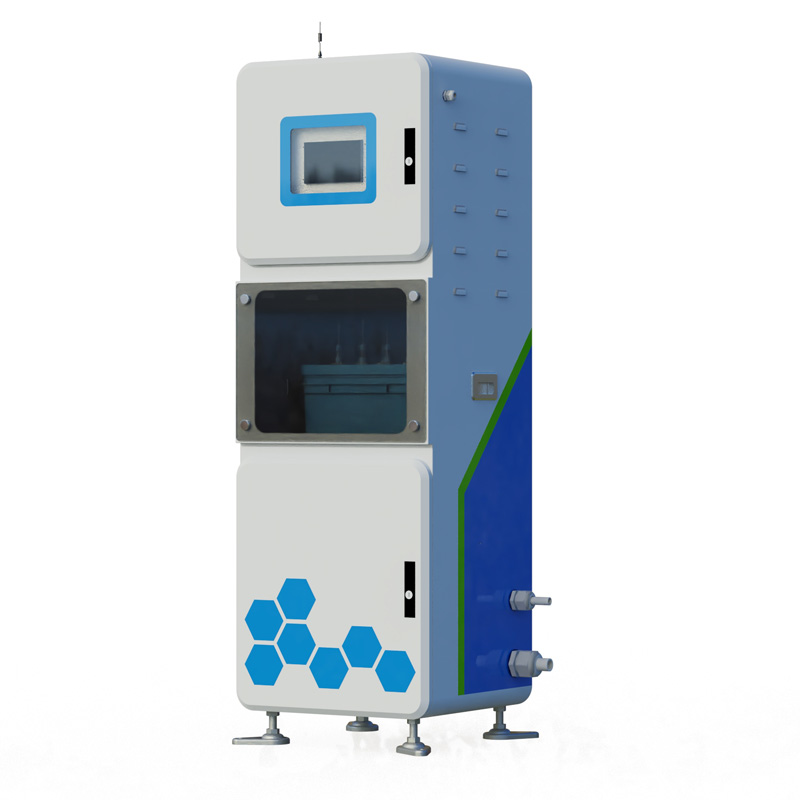
Smart Water Quality Monitor integrates water sampling and distribution with a multi-parameter analysis unit, enabling automatic monitoring within a single cabinet. It can quickly record water parameter data and supports sensor configuration based on wastewater monitoring needs, making it suitable for outdoor environments.
Water temperature, conductivity, pH, dissolved oxygen, ammonia nitrogen, and turbidity are six core indicators for measuring water quality. Water temperature affects the metabolic activities and chemical reaction rates of organisms in the water; conductivity reflects the concentration of ions in the water, indirectly indicating the content of dissolved salts; pH determines the acid-base balance of the water; dissolved oxygen is directly related to the survival and reproduction of aquatic organisms; ammonia nitrogen is an important indicator for judging the degree of eutrophication and organic pollution; turbidity reflects the content of suspended particulate matter in the water, affecting water transparency. Online monitoring equipment for these six parameters can quickly and accurately record water parameter data and is widely used in scenarios such as drinking water safety assurance, wastewater treatment process control, environmental ecological monitoring, and aquaculture management.
From a technical implementation perspective, Smart Water Quality Monitor employs a modular sensor integration design, with each parameter detected independently without interference. pH is measured using a high-precision glass electrode and reference electrode potential difference method, achieving an accuracy of ±0.01. Dissolved oxygen is measured using a fluorescence quenching method; the fluorescent material on the sensor surface emits red light upon blue light excitation, and fluorescence quenching occurs when oxygen molecules in the water come into contact with the fluorescent material. The dissolved oxygen concentration is calculated by detecting the degree of fluorescence intensity decay, resulting in a fast response. Conductivity is determined using a four-electrode AC impedance method or a two-electrode AC impedance method, measuring the conductivity of ions in the solution under an electric field to determine the reading, with a measurement range up to 200 mS/cm. Turbidity is based on the 90° infrared light scattering principle; when infrared light shines on a water sample containing suspended particles, the particles scatter the light, and the turbidity value is calculated by detecting the intensity of the scattered light. Ammonia nitrogen is measured using an ion-selective electrode method, reflecting the ammonia nitrogen content in the water through changes in the potential of the ammonia-sensitive electrode. Temperature is directly measured using a built-in high-precision platinum resistance sensor.
In terms of system architecture, Smart Water Quality Monitor is specifically designed for outdoor scenarios, integrating a water sampling and distribution unit, a pretreatment unit, a multi-parameter analysis unit, a control unit, and a data acquisition and transmission unit. The system uses an intelligent self-priming pump to draw water samples into a flow-through tank. The water samples flow sequentially through the measurement areas of each sensor. The microprocessor simultaneously collects multi-parameter data and transmits the data via an RS485 interface using the ModBus RTU communication protocol. Data is displayed on a 7-inch color touchscreen, supporting historical curve display and data export to a USB drive. The device has a built-in backwashing device to prevent sensor clogging and extend maintenance cycles. For remote communication, the device supports 4G/WiFi wireless transmission, and data is uploaded to an IoT cloud platform in real time. Users can remotely view real-time data and historical trends via a mobile app or computer. When water quality parameters exceed preset thresholds, the system automatically triggers an alarm, sending warnings to management personnel via SMS or app push notifications. The device supports multi-channel sampling and multi-protocol data forwarding, and can be connected to environmental monitoring platforms or existing enterprise information management systems.
In terms of application areas, Smart Water Quality Monitor can be widely used for ecological health assessment and pollution source tracing analysis of natural water bodies such as rivers and lakes; for monitoring source water, treated water, and pipeline water in urban or rural waterworks; for water quality assurance in secondary water supply facilities and at the end of the user's water supply chain; for influent water quality assessment, biochemical process control, and compliance verification for wastewater treatment plants; for multi-parameter linkage control of industrial wastewater in the chemical, pharmaceutical, and food industries; and for real-time control and disease prevention of key indicators such as dissolved oxygen and ammonia nitrogen in aquaculture water bodies. The instrument supports the expansion of multi-parameter water quality sensors, allowing for flexible combination and configuration of sensors according to wastewater monitoring needs.
Overall, this equipment achieves multi-parameter automatic water quality monitoring within an integrated cabinet, exhibiting high integration, a small footprint, and the ability to operate unattended outdoors. By monitoring changes in various physicochemical indicators in water bodies in real time and continuously, this equipment helps water management departments, water plant operation and maintenance personnel, and environmental protection regulatory departments to promptly detect water quality anomalies. It plays a data support role in areas such as source water quality early warning, water plant process control, wastewater discharge supervision, and water environment governance performance evaluation. Compared to traditional single-parameter manual sampling, this type of equipment shifts from point-based collection to continuous online monitoring, significantly improving the timeliness and data density of water quality information acquisition. For important nodes such as river sections, drinking water sources, and industrial park sewage outlets that require long-term dynamic tracking of water quality, the deployment of Smart Water Quality Monitor has become a standard configuration for refined water quality management.
Article address:https://www.sqqx.net/en/news/883.html