
 +86 15898932201
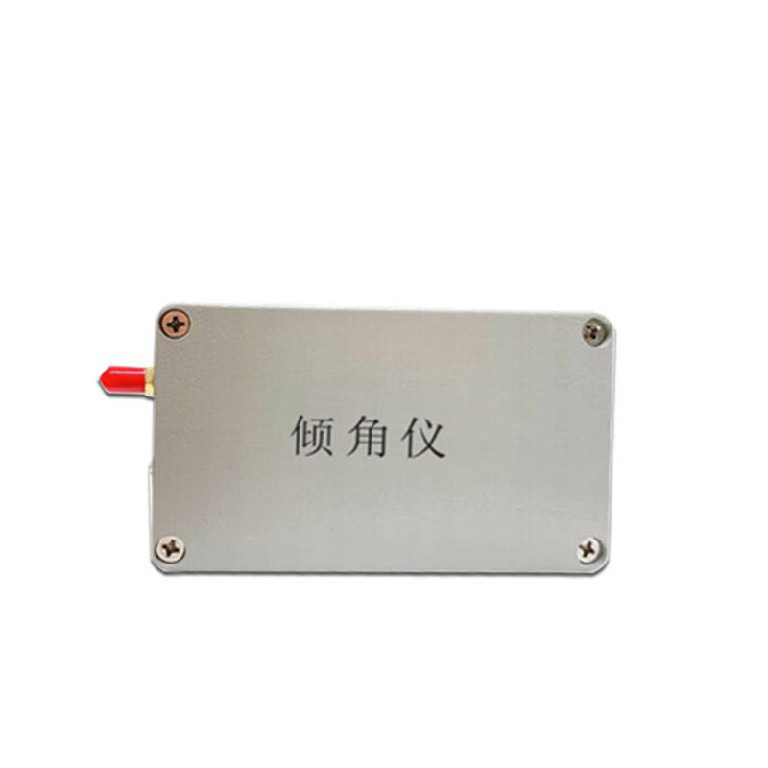
Wireless Tilt Sensor is a sensor integrating three-axis tilt and vibration monitoring functions. It features data acquisition, wireless communication, and self-powering capabilities, allowing for real-time measurement of tilt and vibration changes. It is suitable for safety monitoring in various fields, including geological hazards, geotechnical engineering, and building structures.
Wireless Tilt Sensor is an intelligent monitoring device that integrates sensing, data acquisition, power supply, and communication functions. Its core function is to measure the changes in the tilt angle and vibration acceleration of an object in three-dimensional space in real time. The device contains a high-precision three-axis MEMS accelerometer, which measures acceleration components in three orthogonal directions. Through algorithmic processing, it can simultaneously output three-axis tilt data and three-axis acceleration data. In addition, the device usually integrates a temperature sensor to collect ambient temperature information for temperature compensation of acceleration and tilt readings, eliminating the impact of temperature drift on measurement accuracy and ensuring long-term data stability in complex environments.
The core technological features of this device lie in its high degree of integration and wireless design. It packages the sensor module, microprocessor, wireless communication module (such as LoRa, NB-IoT, 4G, or ZigBee), and built-in battery in a compact, robust casing. This integrated design allows it to operate independently without the need for complex cabling, greatly simplifying the installation process, and making it particularly suitable for monitoring scenarios where power supply is difficult, wiring is inconvenient, or mobility is required. The device has self-protection capabilities, usually reaching a high protection level, making it dustproof and waterproof, and suitable for harsh outdoor environments. Its operating mode can be flexibly configured, supporting timed acquisition, event-triggered acquisition, or continuous acquisition, and sending data in real time to a remote monitoring center or cloud platform via a wireless network.
In terms of functional output, the device supports simultaneous output of multiple parameters, including three-axis tilt, three-axis acceleration, and temperature. The three-axis tilt data directly reflects the attitude angle changes of the monitored object, including the roll and pitch angles of the X and Y axes. The three-axis acceleration data records the vibration or motion acceleration values of the object in three directions, which can be used to analyze vibration frequency, amplitude, and impact events. This raw data, or results after preliminary processing through edge computing, is transmitted wirelessly to provide real-time information for remote status assessment.
Wireless Tilt Sensor has a wide range of applications. In geological disaster monitoring, it is installed on landslides, unstable rock slopes, or retaining walls to continuously monitor subtle changes in inclination and vibration acceleration, providing critical data for disaster early warning. In geotechnical engineering, it is used for deformation and stability monitoring of foundation pits, slopes, and tunnel structures. In civil engineering, it can monitor the attitude, settlement, and wind-induced vibration of tall buildings, bridges, and tower structures. In the transportation sector, it is used for condition monitoring of railway subgrades, highway slopes, and track evenness. In water conservancy and municipal engineering, it is applied to the safety monitoring of dams, dikes, pipe galleries, and tall structures. Its wireless capabilities make the construction of large-scale, distributed monitoring networks efficient and feasible.
This device solves the problems of cumbersome installation, high maintenance costs, and limited monitoring points associated with traditional wired sensors. Users can view data curves from each monitoring point in real time through the monitoring platform, receive alarm information for exceeding limits, and perform trend analysis and safety assessments based on historical data. When selecting such equipment, it is necessary to consider its measurement range, accuracy, resolution, wireless transmission distance and power consumption, battery life, and platform software compatibility based on the specific application. With the development of Internet of Things technology, Wireless Tilt Sensor has become an indispensable sensing unit in infrastructure health monitoring and geological safety early warning systems.
Article address:https://www.sqqx.net/en/news/810.html