
 +86 15898932201
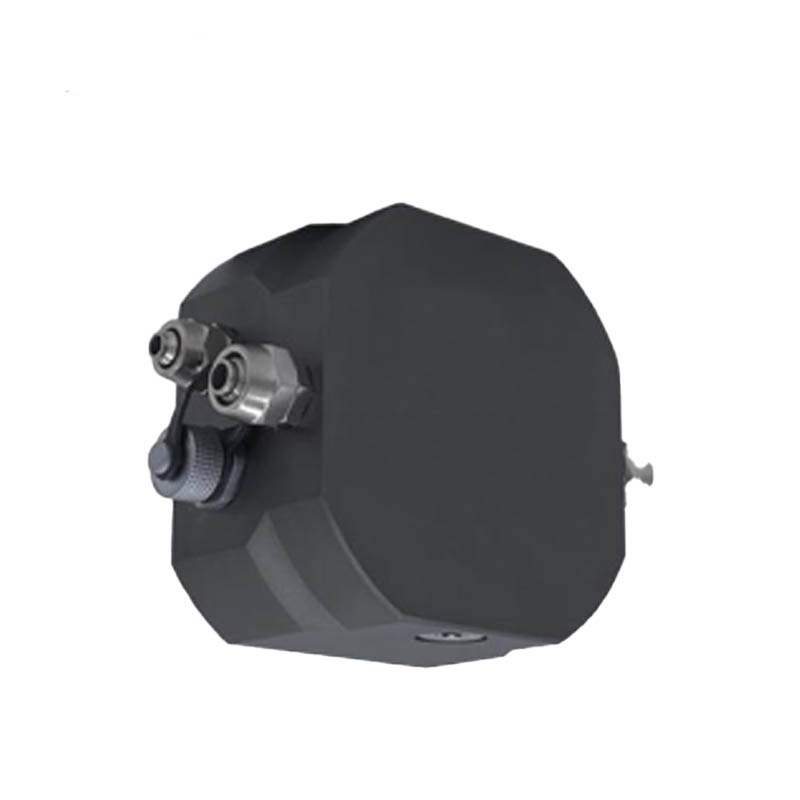
Hydraulic Static Level is a high-precision liquid level measurement system based on the principle of communicating vessels. It infers the settlement amount at each measurement point by measuring the changes in the liquid level height of interconnected liquid storage tanks. It is used for measuring multi-point relative settlement and is widely applied in the long-term online monitoring of vertical displacement and uneven settlement of slopes, bridges, tunnels, foundation pits, dams, and other engineering structures.
Hydraulic Static Level is a precision instrument used for accurately measuring settlement changes in engineering structures. Hydraulic Static Level operates based on the principle of communicating vessels. The system consists of multiple interconnected liquid storage tanks, each installed at a measurement point. The tanks are connected by pipes and filled with a stable liquid medium, such as silicone oil or distilled water. The system designates one tank as a reference point, and other measurement point tanks are connected to it. When all measurement points are at the same horizontal level, the liquid levels in all tanks are the same. If a measurement point undergoes vertical displacement or settlement, the position of its tank changes, causing the liquid to flow in the pipes until the system reaches hydrostatic equilibrium again. At this point, the liquid levels in the tanks change. By measuring the height difference of the liquid level in each tank relative to the reference point using high-precision liquid level sensors, the settlement change at each measurement point can be inferred. This method achieves high-precision settlement monitoring, with a measurement accuracy typically reaching the micrometer level, capable of detecting minute changes of 0.01 mm. Hydraulic Static Level is essentially a high-precision liquid level measurement system. It is specifically designed to measure the relative settlement between multiple points, not absolute elevation. The instrument uses the principle of hydrostatic equilibrium to ensure that the liquid levels in all connected tanks are on the same horizontal plane. When a measurement point settles, the liquid flows from the high-pressure area to the low-pressure area, and the liquid level adjusts. Sensors record these minute changes in real-time, and a data acquisition system processes the signals and calculates the settlement values. The system usually has a temperature compensation function to eliminate the influence of ambient temperature changes on liquid density and volume, ensuring measurement accuracy. Air bubbles in the pipes must be eliminated during installation to avoid measurement errors. Routine maintenance includes checking for liquid leaks and sensor calibration to ensure long-term reliability. This instrument is primarily used to measure relative elevation changes between two or more points. In practical applications, it can detect minute settlement differences, which is crucial for preventing uneven settlement of engineering structures. Monitoring data helps engineers identify problems and take corrective measures in a timely manner, thus ensuring structural safety. For example, in bridge monitoring, uneven settlement can lead to bridge deck cracking or support damage; long-term monitoring using [Hydraulic Static Level] can provide early warning of potential risks. Data processing software typically provides trend analysis and alarm functions, automatically notifying management personnel when the settlement exceeds a preset threshold. [Hydraulic Static Level] is widely used for long-term online monitoring of vertical displacement and uneven settlement in various engineering fields. In slope engineering, it is used to monitor landslides or slope stability, with measurement points placed on potential slip surfaces. In bridge engineering, it can detect the settlement of bridge piers and decks, especially for multi-span bridges, monitoring the settlement difference between each pier. In tunnel engineering, it is used to monitor the deformation of tunnel lining and surrounding strata to prevent collapses. In foundation pit engineering, it monitors the settlement of supporting structures and surrounding buildings during excavation to ensure construction safety. In dam and reservoir engineering, it is used to assess dam safety and reservoir stability, monitoring the settlement of the dam foundation and crest. In building engineering, it is used for foundation settlement monitoring of high-rise buildings, large factories, etc., to prevent structural damage caused by uneven settlement. In addition, it is also suitable for settlement monitoring of infrastructure such as railways, highways, and airports, as well as in fields such as historical building preservation and mining. The advantages of [Hydraulic Static Level] lie in its high precision, long-term stability, and automated monitoring capabilities. The system is usually equipped with high-sensitivity liquid level sensors and data acquisition units, which can transmit data to the monitoring center in real time. This makes it ideal for long-term online monitoring, continuously providing settlement data without manual intervention. Compared with traditional geometric leveling, [Hydraulic Static Level] can achieve continuous, automatic monitoring, saving manpower and improving efficiency. In important engineering projects, [Hydraulic Static Level] is often used in combination with other monitoring instruments such as total stations, GPS, and inclinometers to form a comprehensive monitoring network, comprehensively assessing the structural health status. In short, [Hydraulic Static Level], as a key tool for engineering settlement monitoring, achieves precise measurement of multi-point relative settlement through the principle of hydraulic communicators. It plays an irreplaceable role in engineering projects such as slopes, bridges, tunnels, foundation pits, dams, reservoirs, and buildings, providing reliable data support for the safe operation and maintenance of these projects. With the advancement of surveying technology, the performance of Hydraulic Static Level will be further improved, and its application scope will become even wider. In the future, by integrating the Internet of Things and artificial intelligence technologies, the Hydraulic Static Level system will become more intelligent, enabling automatic early warning and decision support.
Article address:https://www.sqqx.net/en/news/831.html