
 +86 15898932201
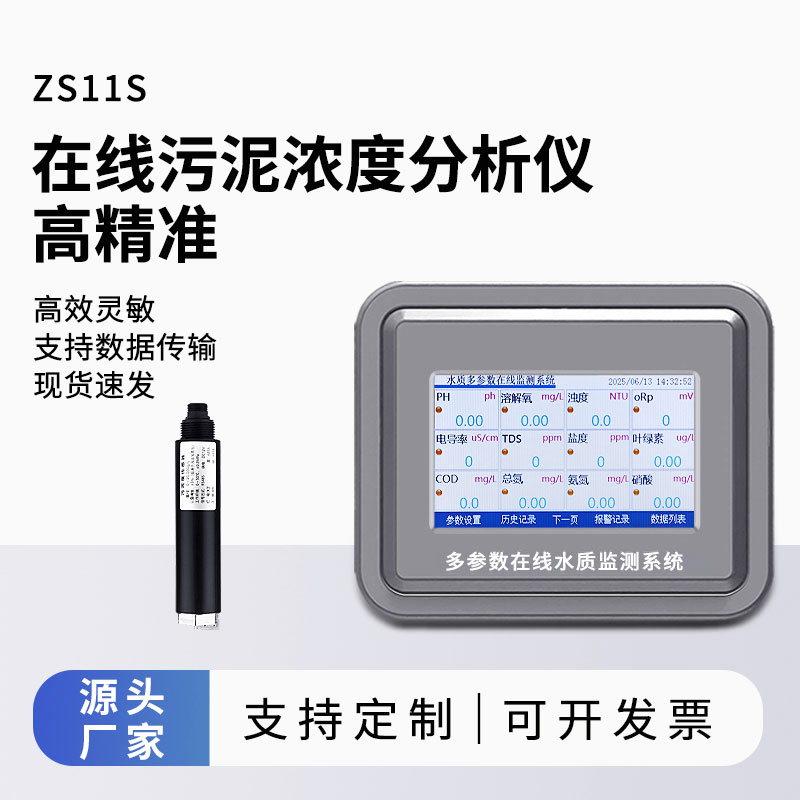
Online sludge concentration meter is an analytical instrument specifically designed for real-time monitoring of sludge concentration, measuring suspended solids concentration during municipal wastewater or industrial wastewater treatment processes using the scattered light method. This equipment is widely used in wastewater treatment, environmental monitoring, and industrial wastewater treatment, providing reliable data support for process control and water quality management.
In wastewater and industrial wastewater treatment, suspended solids concentration is a key indicator for evaluating treatment effectiveness and controlling operational processes. Online sludge concentration meter, as an online analytical instrument specifically designed for monitoring suspended solids content, can reflect real-time concentration changes in biological treatment tanks, sedimentation tanks, and return sludge, helping operators adjust process parameters promptly and ensuring stable operation of the treatment system.
The core working principle of Online sludge concentration meter is based on the scattered light method. When infrared light or laser light emitted by the instrument passes through the water sample being tested, suspended particles in the water scatter the light. The intensity of the scattered light is positively correlated with the concentration of suspended solids. A photodetector installed inside the probe receives the scattered light signal, which is then analyzed and calculated by a microprocessor and converted into a concentration value for output. This measurement method is unaffected by water sample color and turbidity, making it suitable for a wide range of measurement needs from low to high concentrations.
The equipment typically consists of two parts: a sensor and a transmitter. The sensor is directly immersed in the water being measured and has a built-in light source and detection element; the transmitter is responsible for signal processing and data display, while providing a 4-20mA analog output or an RS485 digital communication interface for easy integration into automated control systems. Some models feature an automatic cleaning function, periodically cleaning the optical window with compressed air or a mechanical brush to reduce the impact of sludge adhesion on measurements.
In practical applications, the installation location of Online sludge concentration meter needs to be determined based on process requirements. In aeration tanks, it is used to monitor the concentration of suspended solids in the mixed liquor; at the effluent of sedimentation tanks, it is used to control suspended solids discharge; and on sludge return lines, it is used to regulate the sludge return flow. The instrument can be installed in various ways, including submersible, pipeline, and flow-through types, to adapt to different operating conditions.
The technical advantages of Online sludge concentration meter lie in its real-time performance and reliability. Compared to laboratory sampling analysis, online instruments can provide continuous data, helping operators to promptly detect concentration anomalies. For example, excessively high sludge concentrations may affect sedimentation, while excessively low concentrations may lead to decreased treatment efficiency; these changes can be quickly reported by the concentration meter. Some high-end models can also simultaneously measure parameters such as temperature and turbidity, providing more information for process diagnostics.
When selecting an instrument, the measurement range, accuracy, and media characteristics must be considered. Common concentration ranges in municipal wastewater treatment are 0 to 20,000 mg/L, while industrial wastewater, due to its complex composition, may require customized calibration curves. The probe material must be adapted to the acidity, alkalinity, and temperature requirements of the wastewater to ensure long-term stable operation.
Routine maintenance mainly includes periodic calibration and cleaning. Calibration typically uses a standard sample comparison method, comparing and correcting instrument readings with laboratory weighing results. The cleaning frequency depends on the degree of sludge adhesion; in areas prone to scaling, such as biological treatment tanks, more frequent cleaning cycles are required.
With increasingly stringent environmental emission standards, Online sludge concentration meter is being used more widely in wastewater treatment plant upgrades and industrial wastewater treatment projects. It helps operators understand process change trends, optimize sludge discharge and recirculation control, and provides continuous online data for environmental regulatory departments, becoming an indispensable part of the water quality monitoring system.
Article address:https://www.sqqx.net/en/news/842.html