
 +86 15898932201
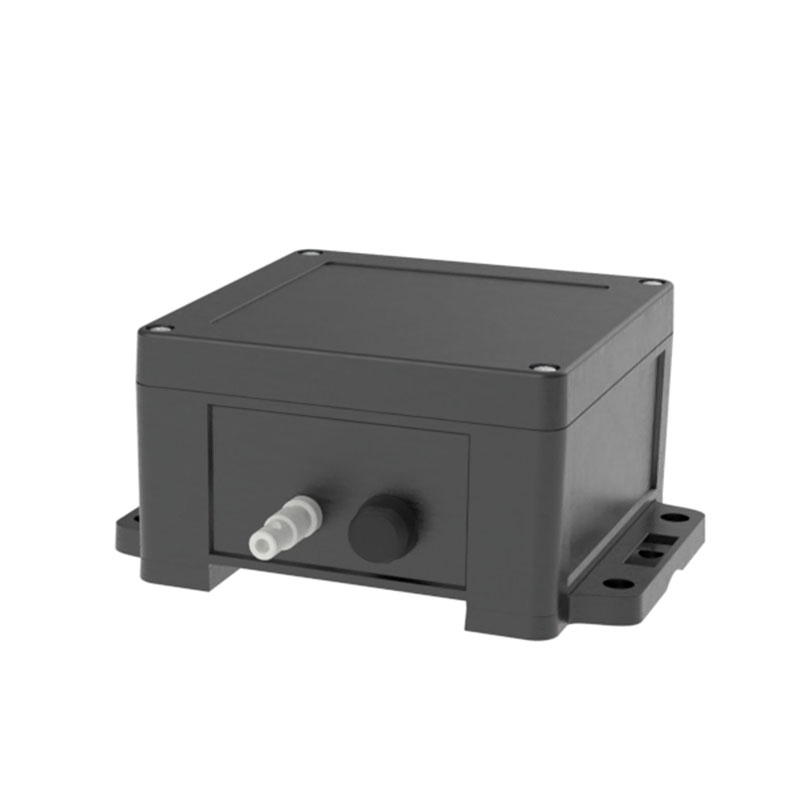
Crack Detection Sensor is an automated monitoring device used to accurately measure the relative displacement changes of cracks in the earth's surface, buildings, bridges, and soil and rock masses. By capturing minute changes in crack width in real time, it provides crucial data support for early warning of geological hazards such as landslides and collapses, as well as for safety monitoring of various engineering structures.
As a core device in the field of geological hazard and engineering structure safety monitoring, Crack Detection Sensor provides quantitative evidence for landslide early warning, bridge health diagnosis, dam deformation monitoring, and building structure damage assessment by continuously monitoring the dynamic changes in crack width. This device typically consists of displacement sensors, a data acquisition unit, a power supply system, and a wireless transmission module. It converts minute changes in crack opening and closing into electrical signals and uploads them in real time to a monitoring cloud platform via communication methods such as 4G, NB-IoT, or BeiDou satellite.
In terms of technical principles, Crack Detection Sensor primarily employs rod-type displacement gauges, laser ranging, or fiber optic grating sensing technology for measurement. The telescopic displacement gauge anchors the two ends of a telescopic rod to both sides of a crack. When the crack opens or closes, the telescopic rod drives an internal precision potentiometer or optical grating ruler to generate a displacement signal, which is then converted from analog to digital and output with millimeter-level or even sub-millimeter-level accuracy. Laser ranging monitors are suitable for scenarios where in-person installation is impossible, measuring distance changes through a reflective target. Fiber optic grating sensors utilize the wavelength sensitivity of fiber optic gratings to displacement to achieve long-distance distributed monitoring, offering strong resistance to electromagnetic interference and making them suitable for complex environments such as high-voltage transmission lines and subway tunnels.
Regarding monitoring accuracy and performance, the standard range of Crack Detection Sensor can be customized as needed, typically 0 to 50 mm, 0 to 100 mm, or 0 to 200 mm, with a maximum resolution of 0.01 mm and a measurement accuracy of 0.1 mm. The equipment generally operates within a temperature range of -40 to 85 degrees Celsius, with a protection rating of IP67 to IP68, making it suitable for outdoor environments with heavy rainfall, high humidity, frozen soil, and salt spray corrosion. The sampling frequency can be set as needed, adjustable from once per minute to once per second. The alarm trigger threshold supports multiple settings. When the crack deformation rate exceeds the set value or the cumulative displacement reaches the warning line, the system automatically sends alarm information to the management personnel's mobile phones and the monitoring center.
In the field of geological disaster monitoring, Crack Detection Sensor is widely deployed at the rear edge of landslide cracks, fissures in collapsed rock masses, and in ground subsidence areas. By continuously monitoring crack deformation rate and cumulative displacement, combined with environmental factor data such as rainfall and soil moisture content, landslide early warning criteria can be established. For example, when the daily crack deformation exceeds 10 mm and continues to accelerate, the system automatically issues a yellow warning; exceeding 50 mm triggers a red warning, activating on-site audible and visual alarms and organizing personnel evacuation. In high-risk geological disaster areas such as Gansu and Sichuan, Crack Detection Sensor has successfully issued early warnings for multiple landslide disasters, buying valuable time for evacuation.
In geotechnical and civil engineering, Crack Detection Sensor is used to monitor the impact of foundation pit excavation on surrounding buildings, surface settlement cracks caused by tunnel construction, and uneven settlement cracks in high-rise buildings. Monitoring data is uploaded to a safety monitoring platform in real time and compared with design thresholds. When crack width approaches the specification limit or deformation rate changes abruptly, reinforcement measures are taken promptly. In bridge engineering, Crack Detection Sensor is installed at cracks in piers, box girders, and bridge decks to monitor the development trend of structural damage and assist in the formulation of maintenance plans. In dam safety monitoring, Crack Detection Sensor works in conjunction with piezometers and inclinometers to jointly assess changes in the structural behavior of the dam, ensuring the safe operation of hydraulic facilities.
In terms of technological evolution, modern Crack Detection Sensor is gradually developing towards low power consumption, wireless self-organizing networks, and edge computing. The device incorporates a low-power microprocessor and lithium battery, combined with a solar charging system, enabling continuous operation for more than three years in power-free outdoor environments. Utilizing self-organizing networking technologies such as LoRa and ZigBee, multiple Crack Detection Sensor units can form a star or chain-like monitoring network. Data is aggregated at the gateway and then uploaded to the cloud platform. Some intelligent Crack Detection Sensor units support edge computing, enabling real-time data processing and direct alarm signal output at the sensor end, reducing data transmission latency and cloud computing load. The monitoring cloud platform integrates a GIS geographic information system, enabling visualized display of crack point distribution, deformation curve plotting, automatic generation of PDF reports, and multi-level access control, providing end-to-end data support for geological disaster prevention and engineering safety maintenance.
Article address:https://www.sqqx.net/en/news/843.html