
 +86 15898932201
Crack Monitor is a specialized device integrating high-precision displacement sensors with data acquisition and transmission modules. Designed for the precise monitoring of relative displacements—such as those found in surface cracks and structural fissures—it is widely applied across fields including geological hazard management, civil engineering, transportation, and water conservancy. By capturing real-time data on crack variations, it provides a critical basis for issuing early warnings regarding engineering safety.
Crack Monitor is an automated monitoring device specifically designed to measure and record changes in the relative displacement of cracks. Typically comprising four main components—a high-precision displacement sensor, a data acquisition terminal, a wireless communication module, and a power supply system—the device focuses primarily on the precise monitoring of surface cracks, stress-relief fissures, and cracks within buildings or other structures. Compared to manual measurement methods utilizing crack gauges or total stations, Crack Monitor enables continuous, all-weather monitoring without the need for human intervention. This effectively resolves issues associated with manual monitoring, such as low efficiency, data latency, and the high safety risks faced by personnel working in hazardous environments.
From a technical perspective, the core component of Crack Monitor is the displacement sensor. Common sensor types include draw-wire displacement transducers, vibrating-wire crack meters, and Linear Variable Differential Transformer (LVDT) sensors. Taking the vibrating-wire crack meter as an example: this type of sensor features intelligent recognition capabilities and a built-in automatic temperature compensation module, eliminating the need for manual temperature correction during operation. It is well-suited for long-term deployment on the surfaces of concrete structures or geotechnical bodies. Draw-wire displacement transducers, conversely, utilize Invar wire as the sensing element, rendering them highly resistant to the effects of temperature fluctuations. Certain integrated versions of Crack Monitor also incorporate tilt sensors and accelerometers, enabling the simultaneous output of multi-parameter data—including crack width, tilt angle, and vibration acceleration.
Crack Monitor finds extensive application across a wide range of monitoring domains, including geological hazard management, geotechnical engineering, civil engineering, transportation, water conservancy, and municipal infrastructure. In the context of geological hazard monitoring—specifically regarding landslides—the device is frequently deployed to capture real-time data on surface crack variations. Utilizing a trigger-based dynamic monitoring mechanism, the system automatically increases its data acquisition frequency and immediately uploads the data whenever the detected crack displacement exceeds a pre-configured threshold. In the field of civil engineering, Crack Monitor is utilized for the real-time monitoring of structural cracks, tracking changes in crack opening and closing displacements across a wide range of structures—including bridges, tunnels, dams, and high-rise buildings. For geological hazard hotspots—such as unstable rock masses and road slopes—the device monitors the initiation, propagation, and evolutionary trends of cracks, thereby providing foundational data for slope stability assessments. In hydraulic engineering applications, monitoring cracks on dam surfaces is a critical measure for ensuring the long-term operational stability of the structure; Crack Monitor can simultaneously output temperature data from the embedded sensor points, facilitating the analysis of how temperature fluctuations influence crack development.
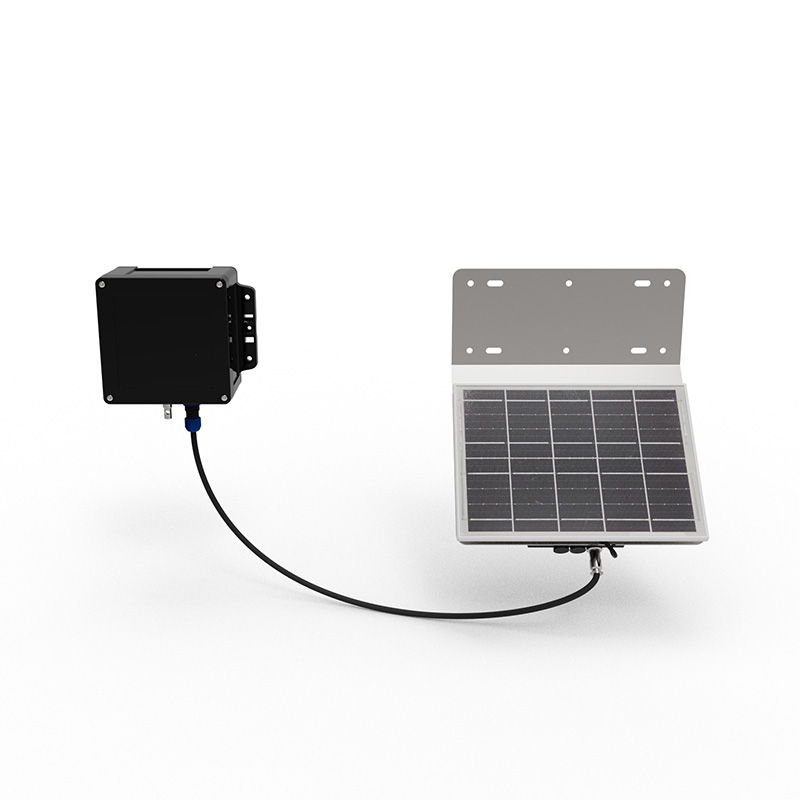
The data transmission and power supply systems of Crack Monitor have been optimized specifically to meet the demands of long-term field deployment. The device typically supports multiple wireless communication protocols—such as 4G, NB-IoT, and LoRa—enabling the real-time uploading of monitoring data to a cloud-based management platform. Users can access data curves, historical records, and early warning notifications directly via a computer interface or a dedicated mobile application.
The early warning capability of Crack Monitor constitutes one of its core values. When monitored data exceeds pre-configured thresholds, the device triggers alarms through a variety of channels, including on-site audible and visual alerts, remote wireless notifications, cloud-based backend warnings, and SMS notifications. This multi-tiered warning mechanism empowers management personnel to stay abreast of structural damage conditions in real time, enabling them to implement emergency response measures *before* a disaster strikes, thereby mitigating potential casualties and property damage resulting from geological hazards. In the context of sudden-onset geological events—such as landslides and rockfalls—Crack Monitor serves as a vital component of the early warning infrastructure, helping to secure precious time for the evacuation of nearby residents.
Article address:https://www.sqqx.net/en/news/856.html