
 +86 15898932201
Tilt Sensor integrates an accelerometer and a data processing unit, enabling real-time monitoring of minute tilt variations in geological bodies and structural elements. The device features an X-axis tilt range of ±180° with an accuracy of 0.1°, a Y-axis range of ±90° with an accuracy of 0.1°, and a Z-axis range of ±180° with an accuracy of 1°; the resolution for all axes is 0.01°. The accelerometer offers a range of ±16g with an accuracy of ±3%. With a power consumption of less than 1W and an IP67 waterproof rating, this product is ideally suited for applications in geological hazard monitoring, geotechnical engineering, and bridge construction.
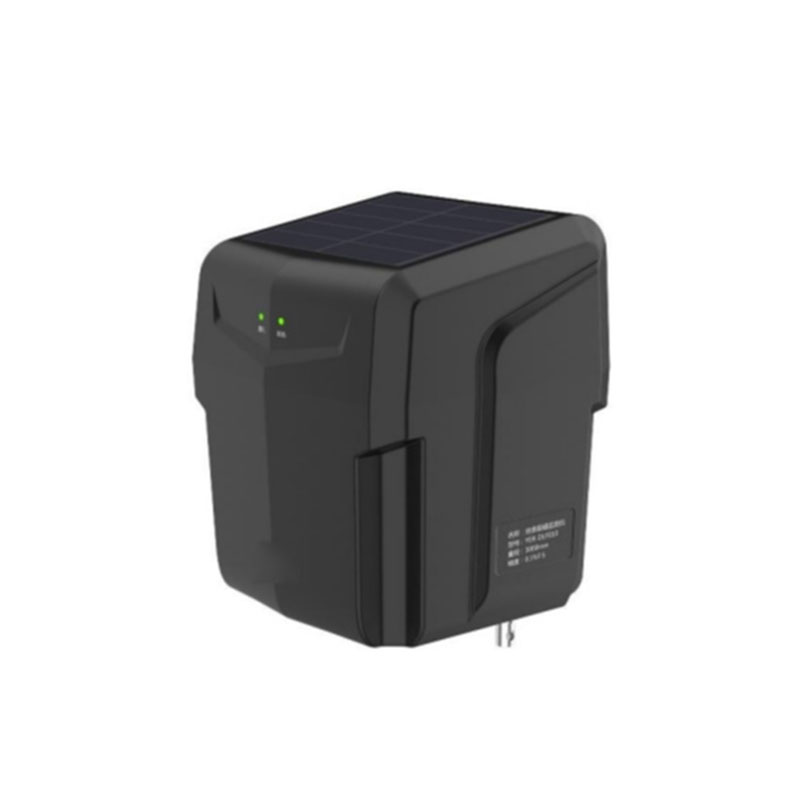
Tilt Sensor is a monitoring device that seamlessly combines high-precision sensors with a data processing unit. It is capable of real-time sensing of the tilt angle of a monitored plane relative to a horizontal reference, as well as the parallelism and perpendicularity between two distinct structural components. Housed in a durable ABS casing, the device comes with a standard cable length of 5 meters. It operates on a DC power supply ranging from 12 to 24 volts, maintains a power consumption of less than 1 watt, and meets the IP67 waterproof standard, thereby ensuring long-term, continuous operation in complex outdoor environments.
The core performance of the sensor is defined by two key sets of parameters: acceleration and tilt. The accelerometer features a measurement range of ±16g, a resolution of 0.5 mg, and a measurement accuracy of ±3%. Regarding tilt parameters, the X-axis measurement range is ±180° with an accuracy of 0.1°; the Y-axis range is ±90° with an accuracy of 0.1°; and the Z-axis range is ±180° with an accuracy of 1°. The resolution for all three axes is 0.01°. Furthermore, the device exhibits a temperature drift tolerance within the range of ±0.5° to ±1°, allowing it to effectively compensate for the impact of ambient temperature fluctuations on measurement results.
In terms of application fields, this device is widely utilized in geological hazard monitoring, where it captures—in real-time—minute tilt variations in landslides, rockfalls, and debris flow source areas, thereby providing critical data support for disaster early warning systems. In the realm of geotechnical engineering, the sensors can be strategically deployed on slope support structures, foundation pit retaining walls, and tunnel linings to monitor tilt deformations induced by construction activities. In architectural engineering applications, high-rise buildings may experience tilting due to wind loads and uneven settlement; by deploying Tilt Sensor sensors, the structural safety status can be effectively assessed.
Bridge erection and railway track laying represent key application scenarios for Tilt Sensor. During the bridge incremental launching process, precise control of the girder's attitude is critical; sensors provide real-time feedback on lateral and longitudinal inclination angles, thereby ensuring erection accuracy. When laying railway tracks, measuring the track's inclination relative to the horizontal plane guides ballast spreading and track fine-tuning operations, ensuring that line smoothness meets design standards.
In the realm of civil engineering monitoring, these devices can be installed on large-scale formwork support systems, scaffolding, and temporary piers to monitor stability throughout the construction process. Offshore oil drilling platforms are subject to swaying caused by ocean waves and wind forces during operations; Tilt Sensor sensors can monitor changes in the platform's attitude in real time, assisting in the adjustment of drill pipe verticality. In the aerospace and maritime sectors, these devices are utilized to measure the attitude angles of aircraft and vessels, providing foundational data for navigation systems.
On industrial automation production lines, Tilt Sensor sensors can monitor conveyor belt misalignment, robotic arm attitude, and the parallelism and perpendicularity of assembly platforms. In smart platform applications, these devices are employed for inclination control in photovoltaic tracking mounts, horizontal leveling of radar antenna bases, and angular positioning in medical equipment. In the mechanical processing industry, by measuring the inclination of machine tool guide rails and the levelness of worktables, one can assess equipment installation precision and operational stability.
The device features a high degree of integration; on-site installation simply requires securing the sensor to the surface of the object being measured, connecting the power supply, and attaching the data cables to initiate measurement. Data output formats can be configured according to user requirements, supporting various modes such as analog voltage, RS485 digital signals, and switch signals. Through accompanying software, users can view real-time inclination curves for each axis and set alarm thresholds; should the degree of inclination exceed safety limits, a warning signal is automatically triggered.
Article address:https://www.sqqx.net/en/news/858.html