
 +86 15898932201
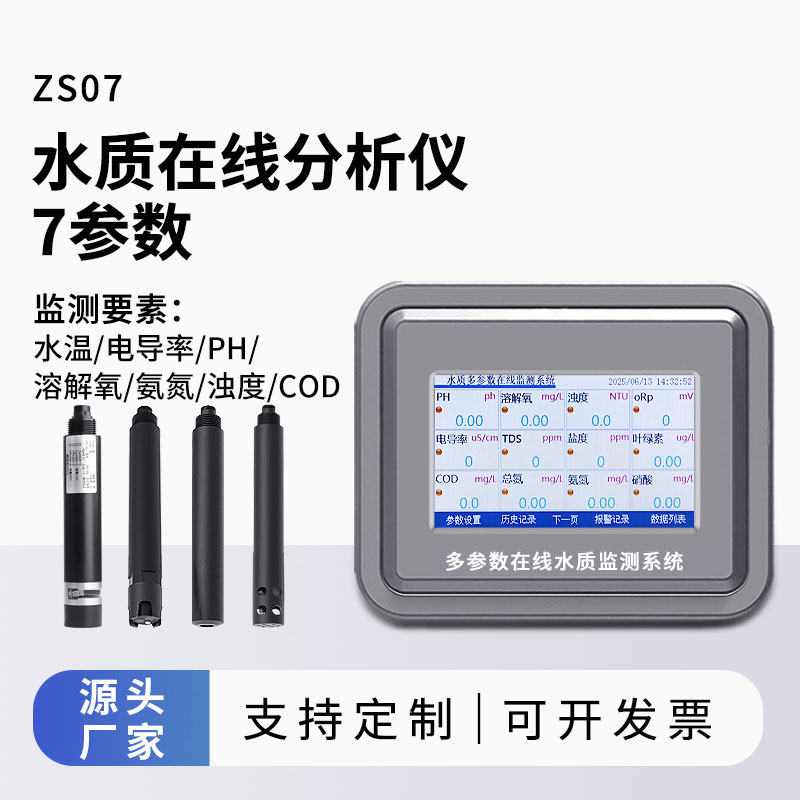
Multi-parameter water quality is capable of measuring seven parameters—water temperature, conductivity, pH, ammonia nitrogen, dissolved oxygen, COD, and turbidity—making it suitable for both field and laboratory environments. As a device integrating multiple water quality detection functions, it is utilized in various applications such as purified water plants, tap water treatment facilities, wastewater treatment plants, aquaculture, and river monitoring.
Multi-parameter water quality is a multi-functional instrument designed to simultaneously measure seven key water quality indicators: water temperature, conductivity, pH, ammonia nitrogen, dissolved oxygen, COD, and turbidity. The device is suitable for use in two distinct settings—on-site field locations and laboratories—allowing users to conduct water quality testing whenever their specific monitoring needs require it.
Regarding the specific parameters measured: water temperature reflects the thermal state of the water body; conductivity characterizes the concentration of ions within the water; pH indicates the acidity or alkalinity level; ammonia nitrogen serves as a crucial indicator for assessing the risk of water body eutrophication; dissolved oxygen reflects the water body's self-purification capacity; COD (Chemical Oxygen Demand) indicates the content of organic pollutants in the water; and turbidity reflects the clarity of the water. When utilized in combination, these seven parameters enable a comprehensive assessment of the overall quality status of a water body.
This analyzer features an integrated design that combines the sensors and the main unit into a single device. The main unit houses a built-in microprocessor and data processing unit, and is equipped with a color display screen and operational buttons. During testing, the user simply immerses the sensor probe into the water sample to be analyzed; the main unit automatically identifies the type of connected sensor and initiates the measurement process. Measurement results are displayed on the screen in real-time and can be stored internally within the device for subsequent data export or printing.
The sensor component employs specific detection principles tailored to each individual parameter. The pH electrode utilizes the glass electrode method; the conductivity electrode employs either a four-electrode or two-electrode design; the dissolved oxygen sensor utilizes either the fluorescence method or the polarographic method; the COD and ammonia nitrogen sensors utilize optical colorimetric principles; and the turbidity sensor employs the scattered light method. The various sensors can be configured either as a single integrated probe or as separate modular units, allowing users to select the specific sensor combination that best meets their particular testing requirements.
This device is applicable across a wide range of industries and scenarios. In purified water plants and tap water treatment facilities, for instance, it is utilized to monitor the quality of treated water—both at the plant's outlet and within the distribution network—to ensure compliance with established quality standards. In municipal and industrial wastewater treatment plants, this device is utilized to monitor water quality fluctuations at various stages—both before and after treatment—thereby enabling the assessment of treatment efficacy. In the field of aquaculture, it provides a basis for water quality management by monitoring key parameters such as dissolved oxygen, ammonia nitrogen, and pH levels. For river monitoring and the protection of drinking water sources, it serves as an essential tool for routine inspections and water quality surveys. Furthermore, in swimming facilities, it is employed to monitor water hygiene conditions, thereby safeguarding the health of swimmers.
The device is powered by a rechargeable battery, with a single charge providing sufficient power to support several hours of continuous on-site testing. The main unit features a dustproof and waterproof design, making it well-suited for operation in humid and rugged outdoor environments. Its data interface supports connectivity with computers or mobile devices, facilitating convenient data management and analysis. By delivering multi-parameter water quality testing capabilities in a portable format, this device effectively meets the diverse on-site testing requirements of a wide range of users.
Article address:https://www.sqqx.net/en/news/859.html