
 +86 15898932201
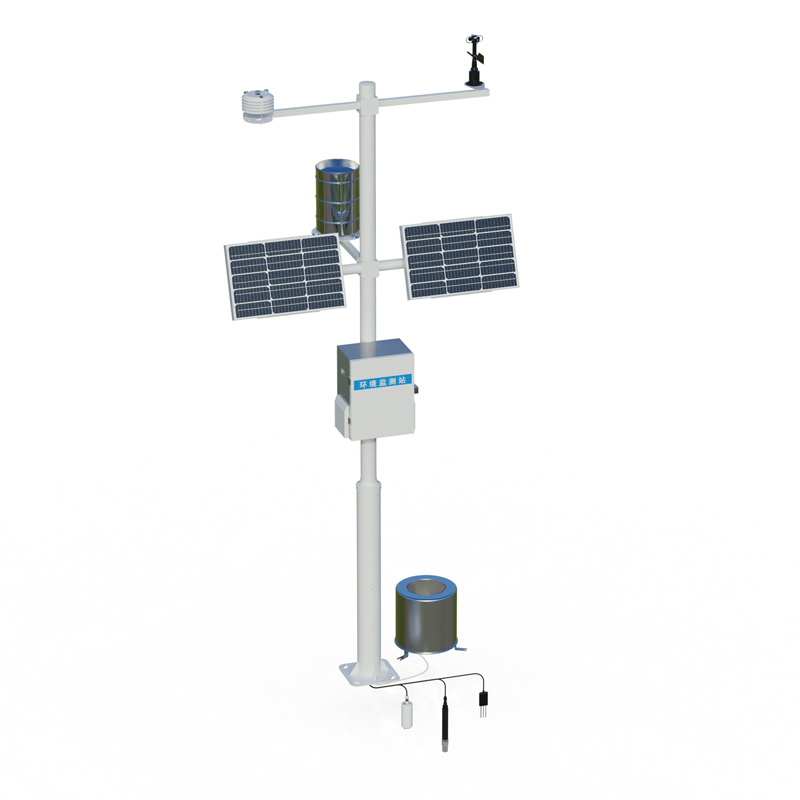
Meteorological and Hydrological Monitoring Equipment consists of five core components: meteorological sensors, a data collector, a solar power supply system, a mounting pole, and a cloud platform. Designed for rapid, commissioning-free deployment, the system is capable of monitoring over 30 environmental parameters—including ambient temperature and humidity, wind speed and direction, rainfall, soil parameters, and air quality—and is widely utilized in meteorological stations, hydrological stations, and various outdoor environmental monitoring applications.
Meteorological and Hydrological Monitoring Equipment is an integrated, automated monitoring system that combines multiple sensors with data acquisition and transmission capabilities. It comprises five main parts: meteorological sensors, a data collector, a solar power supply system, a mounting pole, and a cloud platform. The device features a modular design; sensor and collector parameters are pre-configured at the factory, allowing the unit to become operational immediately after field installation without the need for on-site commissioning, thereby significantly shortening the deployment cycle. The system is widely deployed in meteorological stations, hydrological stations, and various outdoor environmental monitoring sites, making it suitable for applications in meteorology, agriculture, forestry, scientific research, water resource management, and related fields.
In terms of monitoring parameters, the device can simultaneously acquire data on a wide range of meteorological and hydrological variables. Meteorological parameters include ambient temperature, relative humidity, light intensity, atmospheric pressure, dew point temperature, wind direction, wind speed, average wind speed, rainfall, UV radiation, sunshine duration, total solar radiation, and photosynthetically active radiation (PAR). Soil-related parameters cover tube-based measurements of soil temperature, soil moisture, soil salinity, soil pH (via electrode method), soil N-P-K (Nitrogen, Phosphorus, Potassium) levels, and soil evaporation rates. Air quality and environmental parameters include carbon dioxide (CO2), PM2.5, PM10, carbon monoxide (CO), sulfur dioxide (SO2), nitrogen dioxide (NO2), ozone (O3), negative oxygen ions, and oxygen content. Users can select specific sensor configurations based on their actual requirements to create customized monitoring solutions.
The device utilizes a solar power supply system as its primary energy source. Coupled with a high-capacity backup battery, the system can maintain continuous, normal operation for 7 to 15 days, even under prolonged overcast or rainy conditions. The data collector features a low-power design with a standby power consumption of less than 0.5W; data acquisition intervals and reporting frequencies can be configured remotely via the cloud platform. Furthermore, the system supports multiple communication protocols, ensuring adaptability to the diverse data transmission requirements of various field environments. The support pole is constructed from galvanized steel or stainless steel tubing; its height can be customized to suit the specific monitoring environment. On-site installation is straightforward, requiring only the pouring of a concrete foundation cage to securely anchor the pole.
The cloud platform serves as the central hub for data management and visualization for this device. It supports multi-site connectivity, real-time data display, historical data querying, chart generation, and report export capabilities. Users can monitor real-time values and observe trends for various monitoring parameters via a web-based interface on a computer or through a dedicated mobile application. The platform features a built-in threshold-based alarm system that automatically triggers and transmits alert notifications whenever monitored data falls outside of the pre-configured acceptable range. Leveraging IoT and wireless communication technologies, this device monitors the operational status of water infrastructure—including rivers, lakes, reservoirs, and dams—thereby providing essential foundational data to support water resource management, flood control and disaster mitigation, and ecological conservation efforts. Ultimately, it facilitates the automated collection and remote management of hydrometeorological data.
Article address:https://www.sqqx.net/en/news/863.html