
 +86 15898932201
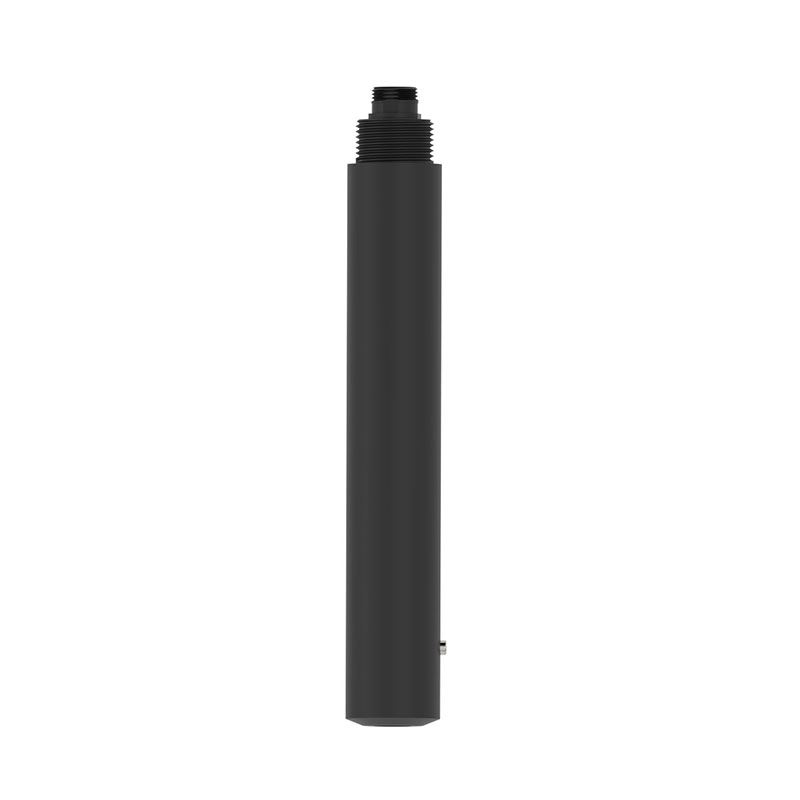
Dissolved oxygen sensor employs the fluorescence quenching principle to detect dissolved oxygen content in water, featuring a measurement range of 0 to 20 mg/L and a resolution of 0.01 mg/L. This instrument requires neither electrolytes nor membrane replacements; it is unaffected by water flow velocity, offers extended maintenance-free intervals, and is suitable for a wide variety of water quality monitoring scenarios, including aquaculture, wastewater treatment, and environmental monitoring.
Dissolved oxygen sensor is a water quality analysis device based on the fluorescence quenching principle, designed to measure the concentration of dissolved oxygen in water bodies. Dissolved oxygen is a critical indicator for assessing water quality health, directly impacting survival rates in aquaculture, the efficiency of wastewater treatment processes, and the ecological balance of natural water bodies. Traditional dissolved oxygen detection methods—such as polarography and iodometry—rely on electrochemical reactions or chemical titrations; these methods require the periodic replacement of electrolytes and membranes, consume oxygen during the measurement process, impose specific requirements regarding water flow velocity, and are prone to errors in water bodies containing interfering substances such as sulfides.
Dissolved oxygen sensor fundamentally resolves these issues. The surface of the instrument's sensor probe is coated with a fluorescent material; when illuminated by blue light, this fluorescent material becomes excited and emits red light. When oxygen molecules in the water collide with the excited-state fluorescent material, a "quenching" effect occurs, resulting in changes to the intensity and duration of the fluorescent signal. The higher the oxygen concentration, the faster the fluorescent signal decays. By detecting the changes in fluorescence lifetime and applying temperature compensation algorithms, the instrument accurately calculates the dissolved oxygen concentration in the water. This process consumes no oxygen and does not rely on electrochemical reactions; consequently, the instrument requires no membrane or electrolyte replacements, resulting in significantly reduced maintenance costs. Furthermore, the measurement results remain unaffected by water flow velocity—enabling accurate measurements even in static water—and the device is insensitive to interfering substances such as sulfides and chloride ions.
In terms of technical specifications, the measurement range of Dissolved oxygen sensor typically spans 0 to 20 mg/L, with a resolution of 0.01 mg/L. The measurement accuracy reaches ±2% or ±0.3 mg/L, and the T90 response time typically falls within the range of 30 to 60 seconds. The instrument features a built-in temperature sensor that enables automatic temperature compensation, ensuring measurement accuracy across varying water temperatures. Select portable models are powered by lithium batteries; the main unit boasts an IP65 protection rating, while the sensor achieves an IP68 rating, allowing for direct immersion in water for measurement.
The application scenarios for the Dissolved oxygen sensor span multiple fields of water quality monitoring. In aquaculture, operators can utilize real-time monitoring of dissolved oxygen concentrations to promptly detect potential hypoxia risks and automatically trigger aeration equipment, thereby effectively preventing mass mortality caused by low oxygen levels. In wastewater treatment plants, the instrument facilitates online monitoring of dissolved oxygen in equalization tanks, biochemical reactors, and discharge outlets; by precisely controlling the duration and intensity of aeration, it optimizes treatment efficiency while simultaneously reducing energy consumption. In the realm of environmental monitoring, the instrument enables dynamic monitoring of dissolved oxygen in natural water bodies—such as rivers, lakes, and reservoirs—providing essential data support for water quality assessment and ecological restoration initiatives. Furthermore, in both laboratory research and industrial production settings, the Dissolved oxygen sensor serves as a vital tool for routine water quality analysis, distinguished by its high precision and low maintenance requirements.
Article address:https://www.sqqx.net/en/news/872.html