
 +86 15898932201
Water Quality Monitor integrates monitoring functions for pH, temperature, turbidity, conductivity, dissolved oxygen, COD, and ammonia nitrogen. Utilizing a photovoltaic power supply solution, it is ideally suited for long-term, continuous monitoring at remote water sources where access to grid electricity is unavailable.
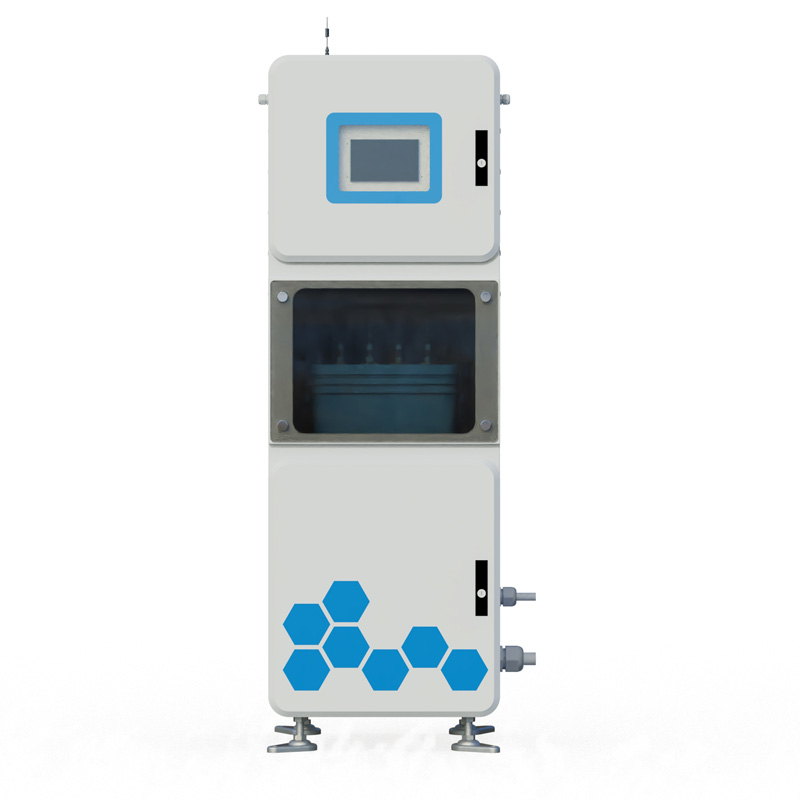
Water Quality Monitor is an integrated, extractive-type automatic water quality monitoring device designed based on Internet of Things (IoT) technology. It was developed specifically for water quality monitoring scenarios at water intake points located in outdoor environments lacking a grid power supply. This device consolidates the multiple independent units typically required by traditional water quality monitoring stations into a single standard cabinet. By breaking the traditional reliance of split-system monitoring equipment on the mains power grid, it enables unattended, real-time online water quality monitoring in remote regions with no grid coverage.
In terms of system architecture, Water Quality Monitor comprises a flow stabilization and degassing unit, an analysis and testing unit, a system control unit, and a remote communication unit. The device's core power system consists of a 200W photovoltaic panel paired with a 12V/100Ah battery. A photovoltaic controller manages power distribution, while an inverter converts DC power into AC power to supply the water pump. The pump control unit employs an intelligent self-priming pump with a maximum lift of 25 meters and an open-flow rate of 1.8 cubic meters per hour, capable of meeting water sample collection requirements across various intake depths. The analysis and testing unit is housed within a flow-through cell and primarily consists of sensors for pH, dissolved oxygen, conductivity, turbidity, and temperature; these sensors must be installed at an incline of at least 15 degrees to prevent measurement errors.
The device's primary monitoring scope covers core indicators of water quality, including key parameters such as pH, temperature, turbidity, conductivity, dissolved oxygen concentration, COD (Chemical Oxygen Demand), ammonia nitrogen content, and suspended solids concentration. The system features a 7.0-inch LED touchscreen display unit mounted on the inner panel of the cabinet door, allowing maintenance and operations personnel to view data and configure system parameters. The remote communication unit supports both GPRS and 4G network connectivity; utilizing an RS485 interface in conjunction with the MODBUS-RTU communication protocol, it transmits the collected sensor data in real-time to an IoT cloud platform. Users can remotely monitor water quality data and equipment operational status at various monitoring points using terminal devices such as computers or mobile phones.
The core advantage of the Water Quality Monitor system lies in its energy self-sufficiency. Solar photovoltaic panels convert light energy into electrical energy, which is then stored in a battery bank, enabling the device to operate stably and autonomously in remote field environments—independent of the municipal power grid. A photovoltaic charge controller manages the charging and discharging of the battery, thereby extending its service life and ensuring basic system functionality even during prolonged periods of overcast or rainy weather. The entire unit features a highly integrated, compact design; its installation requires no complex wiring or extensive civil engineering work. Once the cabinet is secured, the solar panels are mounted, and the water intake pipes are connected on-site, the system is ready for immediate operation. This design allows the water quality monitoring network to effectively extend into areas lacking a stable power supply—such as reservoir zones, upstream river reaches, the centers of lakes, and groundwater extraction sites. This device is suitable for a wide range of applications, including drinking water source monitoring, surface water quality assessment, aquaculture water body surveillance, and industrial wastewater discharge regulation; it provides continuous, traceable water quality data support for water resource management, pollution early warning systems, and ecological conservation efforts.
Article address:https://www.sqqx.net/en/news/877.html