
 +86 15898932201
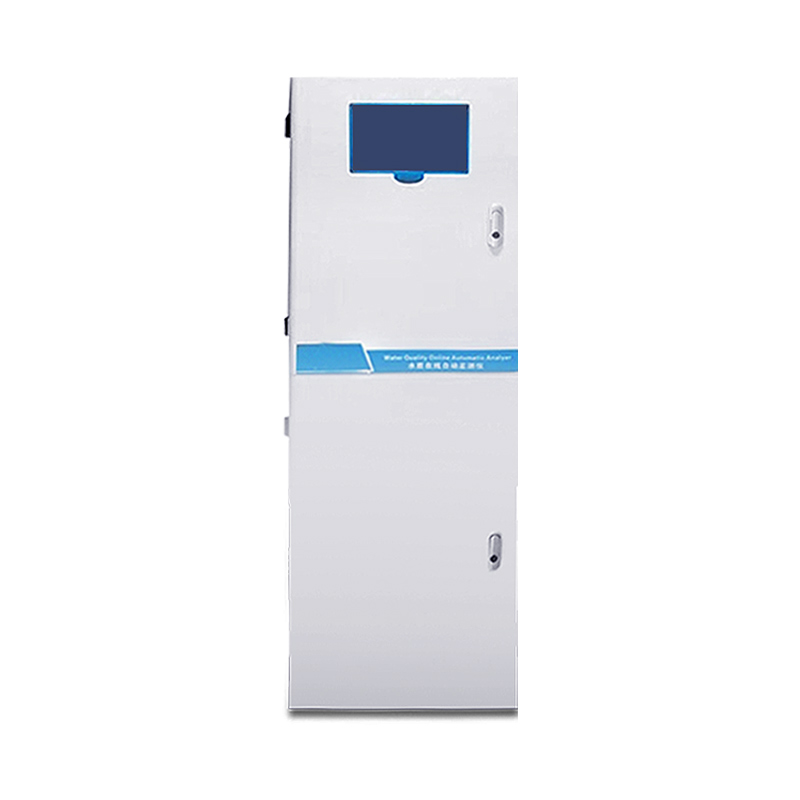
The Effluent Total Phosphorus Online Automatic Monitor is designed based on the Ammonium Molybdate Spectrophotometric Method (Standard HJ670-2013). It functions by converting phosphorus-containing compounds into orthophosphates through high-temperature and high-pressure digestion, which then react with reagents to produce a colored complex. The instrument offers a measurement range of 0–2 mg/L to 0–50 mg/L, with an indicated value error of ≤ ±3% and a waste liquid volume of only 4.5 mL per measurement cycle.
The core measurement principle of the Effluent Total Phosphorus Online Automatic Monitor is grounded in the national standard Ammonium Molybdate Spectrophotometric Method, specifically adhering to the HJ670-2013 standard. Under conditions of high temperature and high pressure, the instrument employs potassium persulfate to digest the water sample under analysis, thereby converting all phosphorus-containing compounds within the sample into orthophosphates. For applications requiring the measurement of orthophosphates only, this digestion step is not required. Subsequently, within a 5% to 8% nitric acid solution, the orthophosphates react with ammonium metavanadate and ammonium molybdate to form a soluble yellow phosphovanadomolybdate complex. The instrument measures the absorbance of this complex at a specific wavelength; since this absorbance exhibits a linear relationship with the orthophosphate concentration in the sample, it can be converted into a quantitative value representing the total phosphorus or orthophosphate concentration in the sample. The entire measurement process is executed automatically by the instrument, encompassing every stage from water sample collection, reagent addition, and digestion reaction to optical detection and data output.
In terms of technical specifications, the Effluent Total Phosphorus Online Automatic Monitor offers multiple selectable measurement ranges—including 0–2 mg/L, 0–10 mg/L, and 0–50 mg/L—which can also be customized or expanded to meet specific user requirements. The instrument's indicated value error is maintained within a tolerance of no more than ±3%, with a detection limit of 0.010 mg/L; the repeatability error is similarly limited to within ±3%. The volume of waste liquid generated per single measurement is a mere 4.5 mL, representing a significant reduction in both reagent consumption and waste disposal costs compared to traditional chemical analysis methods. A typical measurement cycle is completed in approximately 40 minutes, while the maintenance interval extends to over one month, with each maintenance session requiring about one hour. The instrument features automatic calibration, automatic cleaning, self-diagnosis, and power-failure protection capabilities, enabling continuous, unattended operation.
The online automatic monitor for total phosphorus in effluent employs a modular design; reagents and standard solutions are stored in a dedicated reagent cabinet, facilitating simple and convenient replacement. The instrument features an automatic range-switching function: should the concentration of a water sample exceed the current measurement range, it automatically adjusts to an appropriate range to continue monitoring, thereby preventing data loss caused by range overloads. It is equipped with alarms for low reagent levels and system faults; in the event of an anomaly, notifications are transmitted to operations and maintenance personnel via switch signals or network messaging. Data output supports 4–20 mA analog signals as well as RS232 and RS485 digital interfaces, allowing for seamless integration into automatic water quality monitoring stations or corporate environmental monitoring platforms. This device is widely applicable for the continuous online monitoring of total phosphorus concentrations in various settings, including wastewater treatment plant outfalls, industrial wastewater discharge points, automatic surface water quality monitoring stations, and drinking water source areas.
Article address:https://www.sqqx.net/en/news/880.html