
 +86 15898932201
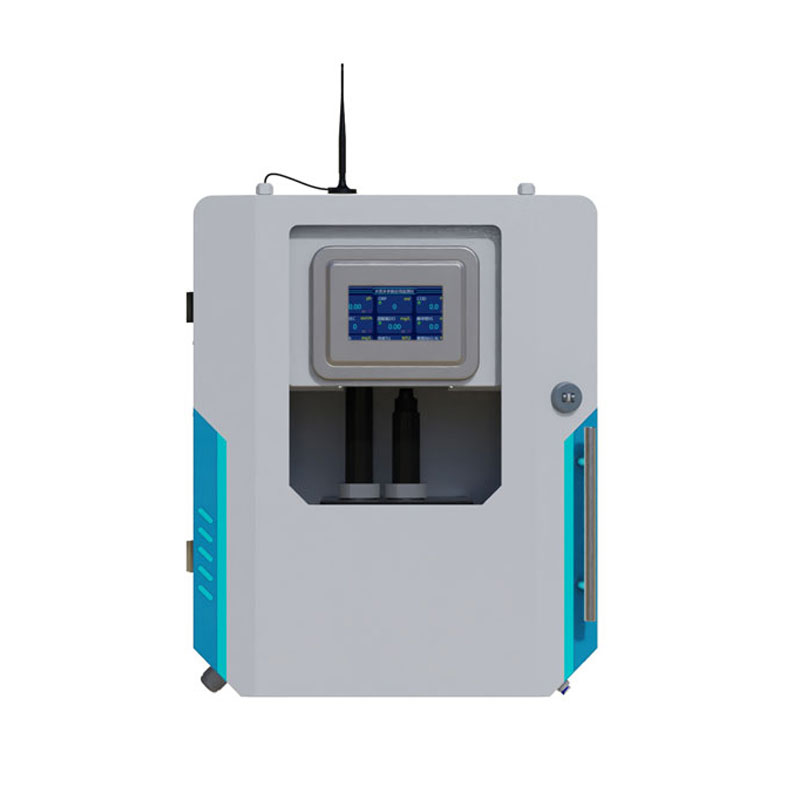
The wastewater monitoring equipment in industrial parks uses water quality sensors for parameters such as water temperature, conductivity, pH, dissolved oxygen, and ammonia nitrogen as its core. It monitors and analyzes various water quality indicators online and uploads the data to a monitoring platform. The system supports real-time data viewing and remote equipment management, and features over-limit alarms, intelligent processing, and comprehensive water quality index assessment functions, providing objective and effective data support for solving water pollution problems in industrial parks.
The wastewater monitoring equipment in industrial parks, with water quality sensors at its core, can simultaneously monitor multiple indicators such as water temperature, conductivity, pH, dissolved oxygen, and ammonia nitrogen. The equipment transmits the collected water quality parameters to the management platform in real time through the sensors. Users can view the data and manage the equipment remotely anytime via computer or mobile phone. The equipment adopts a modular design, making sensor installation convenient and supporting plug-and-play and networked distribution, meeting the monitoring needs of industrial wastewater of different scales.
In actual deployment, wastewater treatment in industrial parks mainly establishes a hierarchical monitoring system, covering three levels: the discharging enterprise end, pipeline nodes, and the wastewater treatment plant inlet. Online water quality monitoring equipment is installed at the wastewater discharge outlets of enterprises to monitor parameters such as chemical oxygen demand (COD), ammonia nitrogen, pH value, and flow rate in wastewater in real time. When pollutant concentrations exceed standards or daily discharge volumes exceed set thresholds, the system automatically triggers an alarm, notifying environmental protection officials to take action and uploading the data to regulatory authorities for review. The system also supports automatic valve shut-off control for exceeding limits, allowing for remote management of valve closure commands to promptly divert contaminated wastewater to an emergency pool, effectively preventing water pollution incidents in industrial parks.
In addition to alarm and remote control functions, the equipment can perform correlation and combination analysis of water quality parameters to present a comprehensive water quality index, helping managers understand water quality trends. Long-term monitoring data can be used for enterprise wastewater discharge pattern analysis, pollutant discharge trend analysis, and early warning of exceeding standards risks. The Tongzhou District wastewater pipeline monitoring project deployed 49 sets of monitoring equipment in two industrial parks, achieving online water quality monitoring at the enterprise level, wastewater treatment plant inlets, and municipal pipelines. A three-year data comparison revealed a significant reduction in contaminated wastewater discharge.
The industrial park wastewater monitoring equipment has strong adaptability to various scenarios. Users can flexibly select sensor types according to their actual monitoring needs. A COD sensor can be configured when chemical oxygen demand (COD) needs to be detected, while a corresponding electrode-based sensor can be configured when heavy metal ion detection is required. This equipment has a small footprint; some micro-stations can be deployed within 2 square meters. It supports rapid initial installation and subsequent relocation for monitoring, making it suitable for integrated applications in fixed stations such as industrial park wastewater monitoring, sewage treatment plant water quality monitoring, industrial pollution source wastewater monitoring, and municipal pipeline water quality monitoring.
Article address:https://www.sqqx.net/en/news/881.html